Water Supply and Stagnant Air Helps Disease Spread

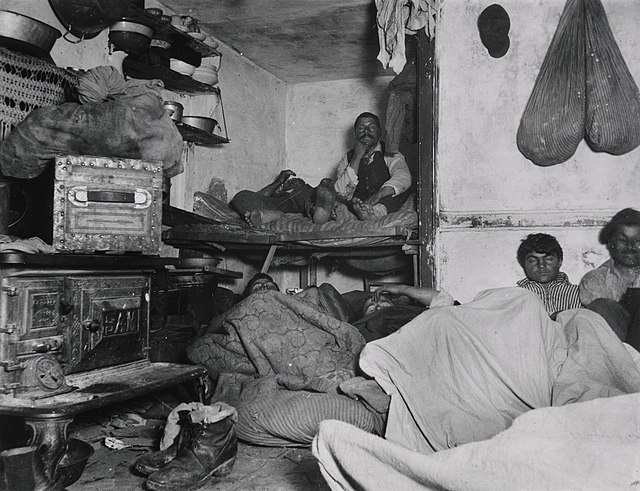
While New York City had the capability to provide fresh water to residential units in the late 1800s and remove waste through a sanitation system, the demand for these services overwhelmed the system. The people in the overcrowded units had no reliable water. The 1894 Tenement House Committee found almost no water being supplied to residents. Residents couldn’t bathe even if they wanted to.
The lack of washing and the buildup of garbage and waste in back yards and air shafts created a superhighway for contamination. Disease, once it took hold in a tenement, grew impossible to stop. The transoms over doors were intended to help natural air flow to mitigate some of these problems, but the transoms merely opened up units to the contaminated garbage air. And the transoms came with trouble of their own; they made fires harder to contain.