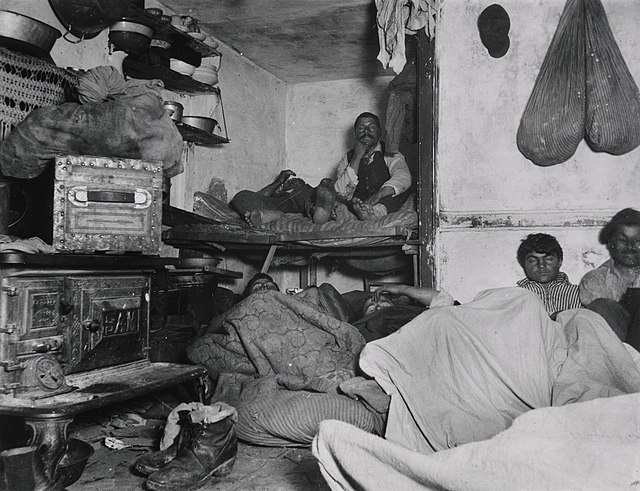
1901 New Law Tightens the Loopholes

The force of change weighed heavily on New York’s tenement districts. “Pre-law” and “Old Law” tenement standards, referring to those attempted reforms in 1867 and 1879, were no longer acceptable. Air shafts had to be provided and the buildings couldn’t be sited so compactly anymore.
After the New Law, the 1901 Tenement Housing Act (aka “New Law”), tenements needed reasonable open space on the lot to allow air and light inside the building and access this light and air via windows from each unit. The New Law tightened safety measures in tenement design, maintenance standards, and safety regulations than its predecessors. This concerned landlords and property owners, who rushed to build their Old Law style buildings before the New Law went into effect. There was a rush of Old Law tenements constructed in haste, making 1901 a remarkably busy year for tenement construction.