
10. The Persians practiced crucifixion as a means of execution
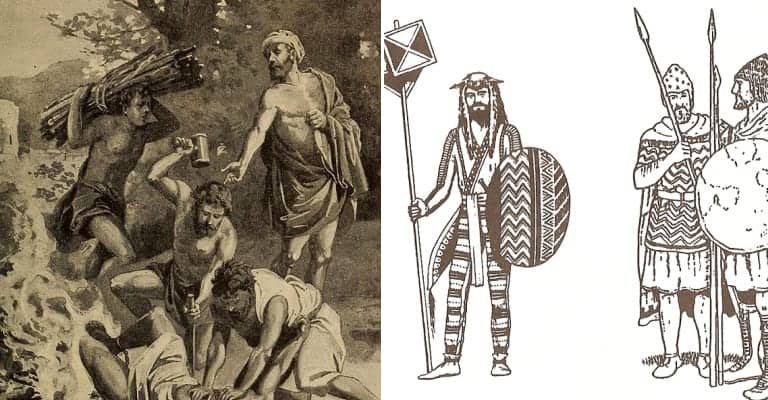
Crucifixion as a means of execution in the ancient world was practiced by many peoples, most famously the Romans. It was seldom that a victim was nailed to a cross, instead the victim was usually bound to a cross beam and suspended, causing a long, slow, and excruciating death, as the weight of the body caused eventual suffocation. Often the victims of crucifixion in Persia had both hands attached to the upright pole, rather than being spread out on a crossbeam. Death by crucifixion was particularly painful (the word excruciating is derived from Latin for out of the cross) as well as humiliating, and a victim could be suspended for several days before death ended his misery.
Often the Persians allowed the humiliation to go on after death by leaving the body of the victim suspended from the pole or cross, to corrupt publicly as it was ravaged by decomposition and the attacks of animals and weather. The Persians, as well as the Mesopotamians, Greeks, Assyrians, Israelites, Carthaginians, Romans, and others all practiced crucifixion as a means of death for particularly despised crimes. In Persia, the bodies of criminals and rebels executed in other ways were sometimes crucified rather than buried or burned. The bodies of some were publicly displayed, such as Polycrates of Samos, who was executed and then his body displayed by crucifixion until nature disposed of it in time.


