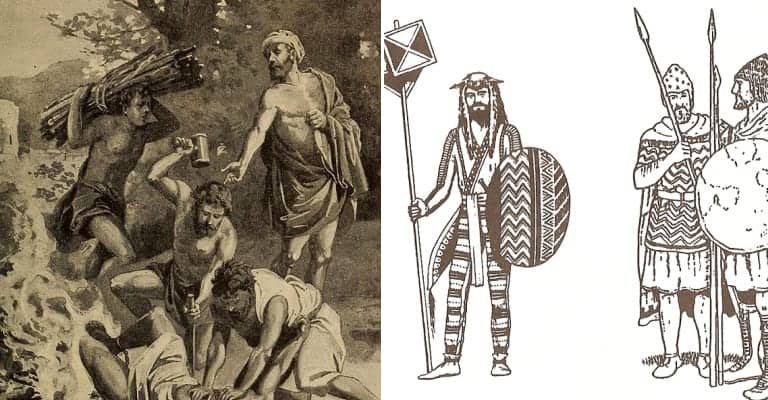

14. Transversal impalement was used to ensure a quicker death
Transversal impalement, in which the stake or pale was driven through the body from front to back (or vice versa) could be used to cause near immediate death or a longer, tormented death, depending upon where in the torso the stake was inserted. The victims of transversal impalement usually died quickly, causing the method to be considered by Persian society a more humane method of inflicting capital punishment. Other methods of impalement have been attributed to the Persians, such as suspending victims from meat hooks, but there is little documented evidence of their doing so. The methods of impalement which they did use were gruesome enough that they don’t need embellishment.
A third method of impalement attributed to the Persians was anal impalement, in which the stake was not sharpened to a point but was deliberately left rounded. In this method, the pole was inserted far enough so that the victim was able to stand on his toes after he was stayed with ropes to prevent him from sliding further down the pale and thus dying too quickly. Depending on long the victim suffered on the pale, the stays could be released, allowing him to end his own life by thrusting downwards. Those executed by anal impalement suffered longer than those impaled by the other methods. Impalement in general lost favor as a means of capital punishment when the Persians adopted crucifixion.


