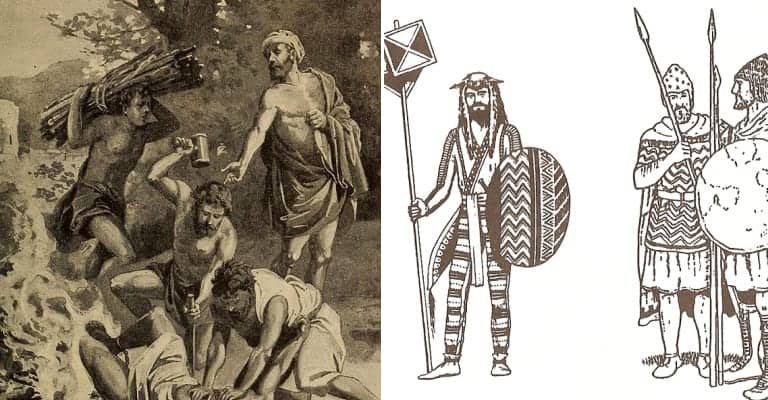

7. Using trees to kill convicted thieves is often reported as a Persian practice
First reported by a British magazine, but with little beyond anecdotes to confirm it, was the practice of the Persians using trees to execute thieves. The magazine, the British Register Volume 34, reported that all such executions were ordered by the Persian king, who never pardoned thieves. In truth under Persian law, thieves were usually punished by maiming them, cutting off the offending hands. According to the British Register, thieves were executed by pulling the trunks of two trees towards each other and then securing them with ropes. A convicted thief was then tied with one arm and leg secured to either tree.
The ropes securing the trees to each other were then abruptly cut and the trees snapped back to their natural position, which as they did split the unfortunate thief in two. The halves of the body were left to hang in the trees, which were usually situated along the roads of the empire, and thus served as effective deterrents to those who may otherwise consider robbing travelers along the road. There is little evidence of the Persians actually using this method of execution and deterrence other than long repetition of the tale which originated with British diplomat James Morier, who reported its use in the British Register in 1808 after traveling to meet with the Persian king.


