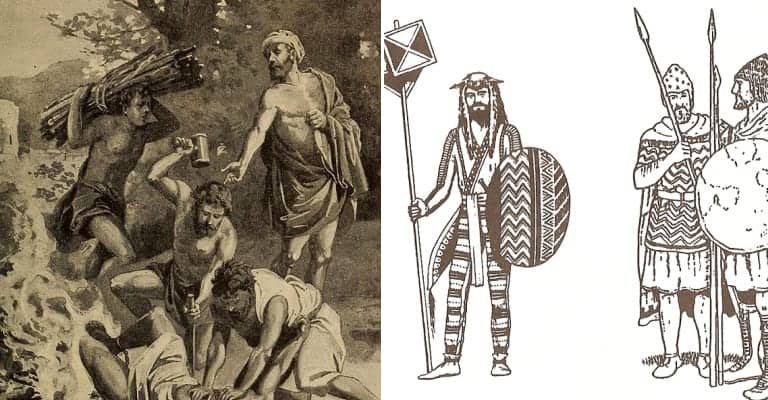

8. Stoning was a common form of execution in Ancient Persia
Stoning is an ancient form of execution frequently mentioned in numerous texts (and still practiced today), including both Old and New Testaments, the works of Josephus, Herodotus, and others of antiquity. In the biblical descriptions, the victim is killed by being pelted with thrown stones. In Persia, heavy stones were used in other ways to execute victims, both as part of interrogation and as execution after conviction of a crime. In one method, heavy stones were placed on the victim’s torso, with additional weight added over a period of time, until the pressure was too great for the muscles of the body to resist and the breath was literally squeezed out of the victim (a similar procedure was used in colonial America against those suspected of witchcraft).
Another method was the simple bashing in of heads using heavy stones, a manner of execution reserved to the lowest levels of society. Servants and the poor were most likely to be executed by stoning, and the servants of nobles could be executed for the crimes of their masters as well as any indiscretions of their own. Because many of the nobility were related either through blood or marriage, prosecuting them for crimes often risked the hostility of other family members. In such cases, the servants became the victims of Persian justice, which extended even into the family of the king in more than one circumstance.


