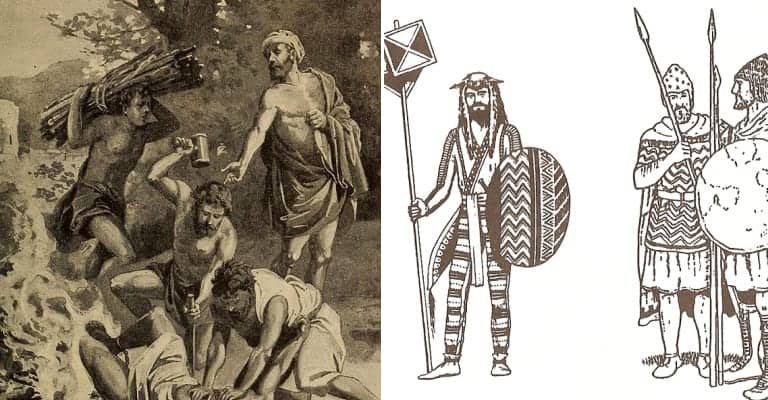

5. The Persians may have used burial of living persons as a means of execution
Burying victims alive, head down in the ground, was reported by Herodotus as having occurred during Xerxes campaign in Greece. Persian magi ordered the internment of nine Greek boys and nine Greek girls in the town of Thrace. The executions were evidently for religious purposes rather than the punishment of crimes. Herodotus also reported similar executions of a dozen Persian noblemen by the order of King Cambyses. In his account of the execution, Herodotus cites that it was ordered for no apparent reason at all, and is an indication of the king’s reported insanity, which was supported by other anecdotal references.
Herodotus also reported the act of execution by burying the victims alive as a religious ceremony ordered by queens, including Queen Amestris, the consort of Xerxes. Amestris ordered the burial of fourteen children of Persian nobility buried head down while still alive as a sign of her gratitude for the gods of the earth granting her a long life. Other than the reports of Herodotus there is no supporting documentation of burying the living as a form of execution for either criminal justice or religious ceremonial purposes. Whether the events recorded by Herodotus actually took place – he provided no sources – is disputed by scholars, despite widespread claims of their authenticity.


