
14. Body Collectors Were Entrepreneurs
Before the Black Death began to ravage Europe, most European cultures had elaborate funeral rites that often involved something comparable to modern pallbearing, where a group of the deceased’s peers bore them to the gravesite. Boccaccio wrote that a dead body, in a proper rite, should be “borne on the shoulders of his peers… to the church selected by him before his death.” However, these rites obviously couldn’t be maintained when hundreds were dying in a matter of days.
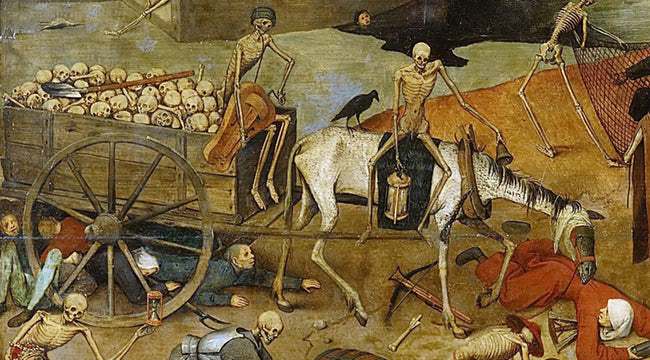
As a solution to this issue, many individuals from the lowest peasant groups saw an opportunity to earn money in a manner that would have been far beneath the dignity of the upper and noble classes. Thus the body collectors were created. Non-disabled men of the lower levels began using their carts to collect bodies instead of agricultural products, earning money out of tragedy. Boccaccio noted the emergence of this profession, writing “a sort of corpse-carriers drawn from the baser ranks, [who] performed such offices for hire.”
The work of the body collectors would be mirrored in the 19th century in connection with another pandemic: cholera. The 19th century saw the expansion of night soil men, particularly in London. Human waste had high value in the creation of both fertilizer and industrial chemicals like saltpeter. Night soil men would travel around cities in the early morning hours collecting trash, and many charged extremely high rates – especially during the cholera epidemic.


