
8. Germany Used to be Pretty Chill About Drugs
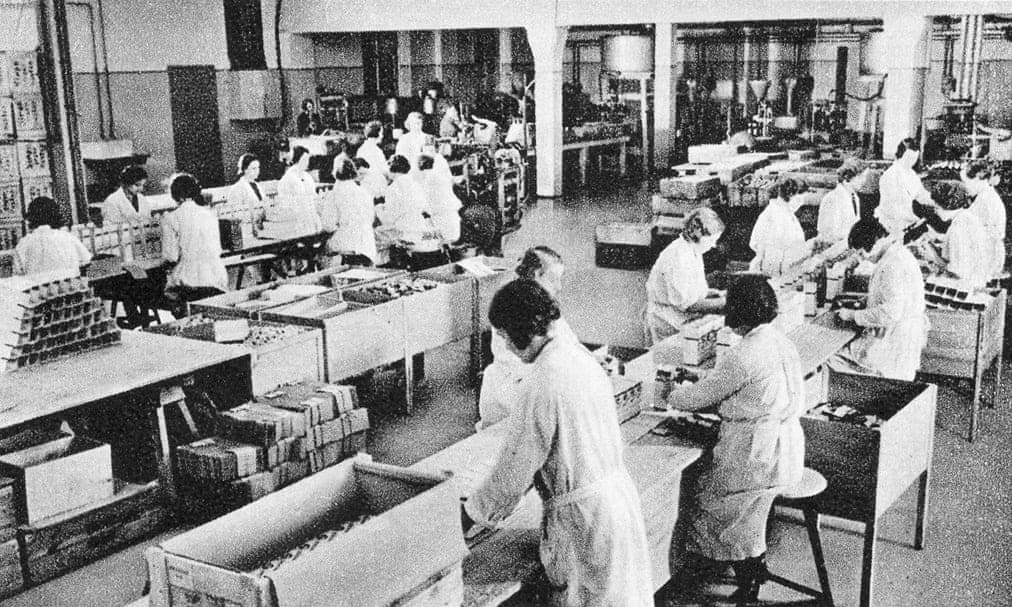
Germany had long been tolerant towards drugs, and official policy that predated the Nazis’ ascension to power in 1933. Before World War I, Germany was the world’s chemical giant. The country’s chemical industry had a de facto global monopoly on drugs whose production required advanced (for that era) expertise and industrial capacity. Germany’s chemical dominance was fueled by collaboration between researchers in German universities and industry. It was an approach pioneered in nineteenth-century Germany, that has since become common around the world.
Back then, the evils of narcotics and the harmful effects of addiction were not yet fully understood. So to produce, sell, market, or use drugs did not carry much of a moral stigma. German chemical research was fueled by the sale of morphine, first distilled from opium by a German chemist in the early nineteenth century. It was patented by Merck not long afterward. Further research on opium, morphine, and their derivatives, led to their inclusion in popular over-the-counter products such as cough suppressants and household pain relievers. The pharmaceutical giant Bayer even got into and made a fortune off of heroin, which was legal in Germany until the 1950s.


