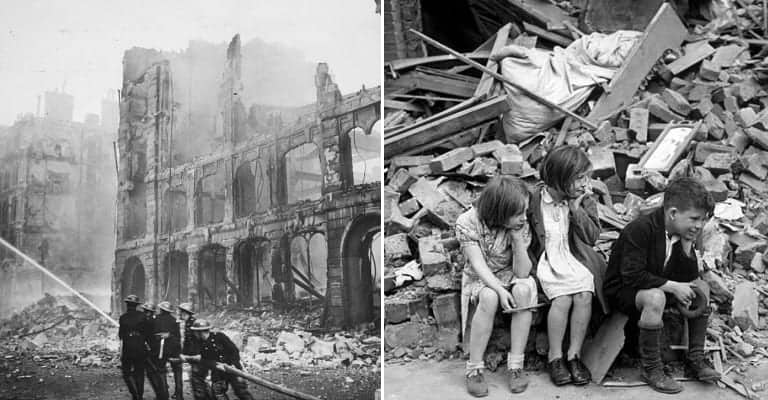

8. The progressive destruction of London and British industrial centers
Throughout the autumn of 1940, the German Luftwaffe continued to pound British cities, though before September ended Hitler canceled the invasion of England – Operation Sea Lion – which he had never fully endorsed other than as a last resort means of obtaining a British surrender after they had lost control of the air. Because Goering retained control of all German military aviation and aircraft production he was actually an obstacle to Germany achieving that goal. Combined operations with the German Navy, the Kriegsmarine, such as mining operations of the estuaries and harbors of Great Britain, would have led to the Royal Navy being exposed to the attacks of German bombers. Goering was convinced that the Luftwaffe alone was sufficient to bring about victory over the British and force peace, though Hitler was no longer convinced.
German military planners were focused on the coming invasion of the Soviet Union, which would be hampered by continuing German losses over England, and was a major reason for the shift to mainly night raids when the bombers were less susceptible to the attacks of British fighters. Several British cities were bombed throughout October, often in series of several nights, including Birmingham, Coventry, Hull (which suffered the largest percentage of buildings lost to the bombing of any British city), Glasgow, and Manchester. The British railway system suffered heavy damage in the bombings, as did the docks and port facilities along the Thames Estuary. The heavy night raids were supported by fighter-bomber attacks to disrupt production in daytime raids, which were often intercepted by the RAF.


