
15. The Germans attempted to destroy the Liverpool port once and for all
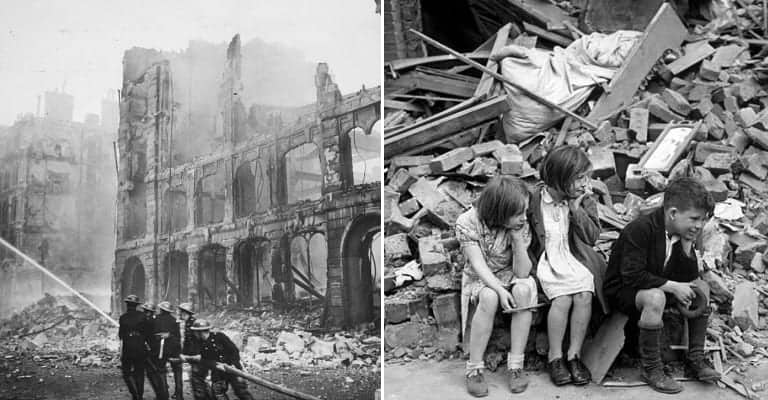
In early May 1941, the German Luftwaffe launched a series of night raids on the port and city of Liverpool, including its surrounding regions and communities. Beginning on the night of May 1, nearly seven hundred German bombers struck at the port and its environs, using mines, high explosive bombs, and incendiary bombs. On May 3, a munitions ship tied up at Huskisson Dock (at one of its two branch docks) was set afire by flames which had originated with incendiary bombs on the dock itself. The ship exploded a few hours following the raid which had started the fires, with such violence that most of the dock was destroyed. The ship’s anchor, which weighed more than two tons, was found more than one and a half miles from the site of the explosion near Bootle Hospital. The town of Bootle itself was heavily damaged in raids of its own.
Out of the 144 cargo berths available in the area, 69 were left out of service following the German raids, yet the port remained open and repairs to facilities began as the fires were still burning elsewhere. Civilian casualties were nearly 3,000 killed or injured, and nearly 200,000 homes in the area suffered some form of damage. Well over 6,000 were completely destroyed by the bombing and the ensuing fires. Later that month the Germans returned to bomb the Clyde facilities, just as the new British battleship Prince of Wales was sortieing to meet the German battleship Bismarck and its consort Prinz Eugen. The failure of the Luftwaffe to prevent the British convoys from arriving and departing from the island nation’s many ports was nearly as big a disaster as its failure to wrest air superiority from their enemy. By the end of May 1941, the German attacks on England’s ports from the air were effectively over.


