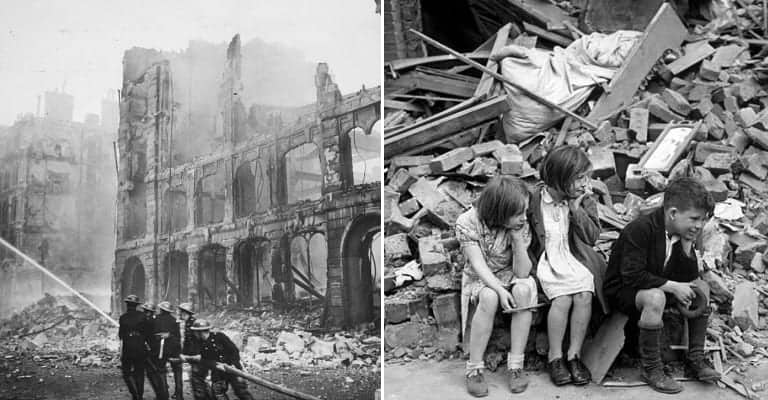

7. The Liverpool Blitz was the largest in Britain after London
In 1940 the main port for the connection of Great Britain with the ports of Canada and the United States was Liverpool. The importance of the port of Liverpool (and Birkenhead) to the British war effort was immeasurable, especially as American aid, at first paid for as “cash and carry” and later through Lend-Lease, began to support the British. Liverpool was critical as an anchorage for ships involved in the Battle of the Atlantic, in the convoy systems, and in overseas trade. By the end of the war, 90% of the war material delivered to Great Britain arrived via Liverpool, including vast numbers of American troops and military equipment. The Germans recognized the value of the port and prioritized it as a target for bombing early in the war, in what became known as the Liverpool Blitz.
The Liverpool Blitz began a week before that of London and continued throughout the ensuing winter and well into the spring of 1941, only ending when most of the Luftwaffe assets available at the time were transferred to the Soviet Union. Some of the heaviest German bombings of the war occurred on the city and its docks and other port facilities. The damage to the port was extensive, but it remained in operation throughout the war. Rail facilities, warehouses, repair yards, factories, and public buildings and churches were damaged or destroyed throughout the area. More than 6,000 private homes were destroyed, another 190,000 were damaged. Over 3,000 people from Liverpool and its surrounding Merseyside environs were killed in the German assaults, which like those of London, failed at first to demoralize the British.


