
9. London goes about its daily business
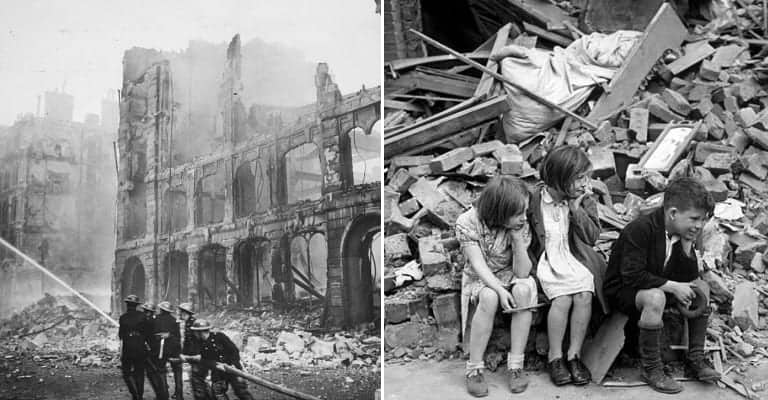
The bombings and the nights interrupted by the air raid sirens summoning the citizens to shelters continued throughout the fall, and when the raids ended and the all clear sounded, the citizens of London emerged and went about the business at hand. Some joined in rescue efforts, others in fire-fighting and removal of wreckage, but the vast majority returned to their shops, their offices, their workbenches, or their delivery vans. London, a city under massive aerial bombardment, went about its business wherever possible. Merchants sold their rationed goods. Housewives queued at the butcher shop, the poulterer’s, or the apothecary’s. Films were shown in the cinemas, plays performed on the stages, in fine weather people strolled in the parks. Despite disruptions in the railways, the commuters somehow found a way to their destinations.
Foreign observers, including news reporters and temporary military personnel from the United States, called the pattern of the German bombing indiscriminate. The Germans lacked the types of precision bombsight to drop bombs with a high level of accuracy, and since they were often guided at night by fires the bombs were scattered over all sorts of neighborhoods, while prominent legitimate targets remained relatively unscathed. Numerous London railway stations were hit by bombs, including the famous Victoria Station. In the East End, Thames shipping was severely hampered by the destruction of river barges, and the docks were battered, but for the most part, the river’s ability to handle commercial traffic was not severely impaired. By the middle of November, it was evident that the German effort was not bringing the British to their knees.


