
17. The last of the major raids on London
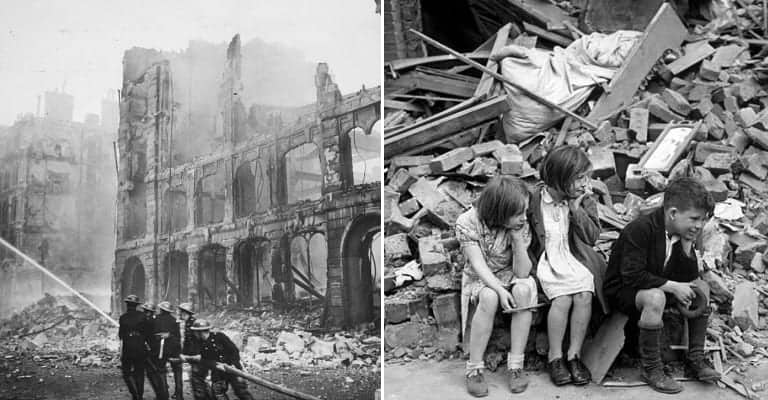
By May 1941 the population of the British capital had endured the threat of air raids from across the Channel for nearly a full year. Whole sections of the city were reduced to rubble. The air raid siren had become a fact of life. On two consecutive nights, May 10/11 and May 11/12 the Germans came yet again. This time there was no illusion of attacking the docks or other areas of the city. In the first raid, almost 600 German airplanes dropped bombs on the city, starting more than 2,000 individual fires, and inflicting well over 3,000 casualties, including more than 1,400 dead. Coupled with the news of the pounding of Liverpool and the other ports, as well as the increasing losses to the U-boats, which were classified but which were talked about by sailors everywhere, morale sank.
It sank yet further when the Germans returned to London the next night, this time accompanied by fighters to engage the RAF, an indication that they were nowhere near giving up the attempt to bomb England into surrender. Westminster Abbey was hit by the bombs, and the nearby Law Courts, a symbol of British Common Law, were also hit and damaged by bombs and fire. The Chamber of the House of Commons was struck by more than one bomb and completely destroyed. By the end of the raid over one-third of London’s streets were closed to traffic, nearly all rail communication in and out of the city was severed, and food, medicines, clothing, and adequate shelter had all become scarce. It was then that the Germans quit coming. There was no announcement. Five weeks later the Germans invaded the Soviet Union.


