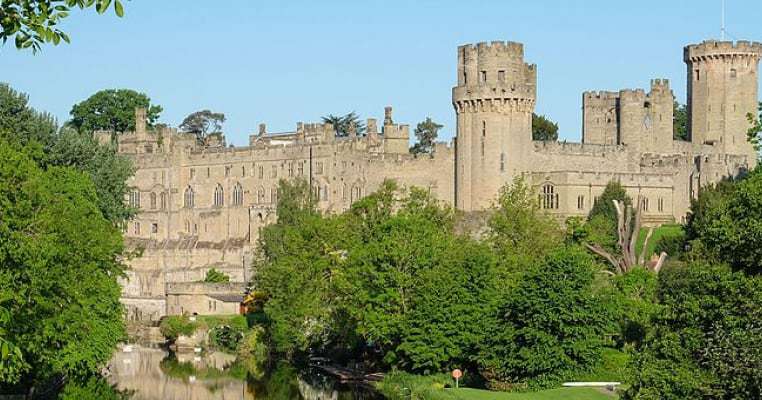

Corfe Castle
Corfe Castle was built in 1066 by William the Conqueror, but its history and significance starts almost 100 years before. In 978, Edward the Martyr, King of England, was assassinated at the age of 15 at a Saxon hall that stood where the castle was later built: ‘no worse deed for the English race was done than this’, notes The Anglo-Saxon Chronicle. This resulted in the succession of Ethelred the Unready (r.978-1013; 1014) who is widely-seen as one of England’s worst ever monarchs. ‘Unready’ comes from the Old English unræd which actually means ‘un-counselled’, a pun on Ethelred (‘wise-counsel’).
Corfe is unusual amongst Norman castles for being built immediately out of stone, signifying its importance, and William established a hunting forest nearby to make the most of the fortification. The great keep, built in the early 12th century by Henry I, added to the defensive potential of the naturally high-ground on which the castle stands. Indeed, Corfe successfully withstood a siege from King Stephen in 1139 during The Anarchy, when the throne of England was disputed and a civil war erupted. Like Kenilworth, Corfe was significantly repaired by King John: whenever there was national unrest, Corfe was strengthened.
After being sold by Elizabeth I in 1572, Corfe remained in private hands until the English Civil War. Dorset, the county in which the castle is located, was loyal to Parliament but the family who then owned the Castle, the Bankes family, were fiercely loyal to the crown. Sir John Bankes was Attorney General to Charles I, and fought alongside the king, leaving his wife, Mary, and children at Corfe, trusting in its impregnability. Realising that the castle was too strong to attack openly the Parliamentarians first tried to infiltrate the garrison after a hunting excursion, but failed.
From 1643, Corfe was placed under siege: anyone caught joining the garrison had their house burned down and supplies were prevented from entering the castle. However, despite initially having a garrison of just 5 soldiers, Mary managed to expand this to 80 and simultaneously to have supplies smuggled through the blockade. Eventually a force of 600 was gathered to lay direct siege to the castle. Mary valiantly lasted several weeks before she was relieved by Royalist forces. Finally, in 1645, a traitor managed to smuggle 100 Parliamentarian soldiers disguised as Royalists into the castle, and it was captured and slighted.


