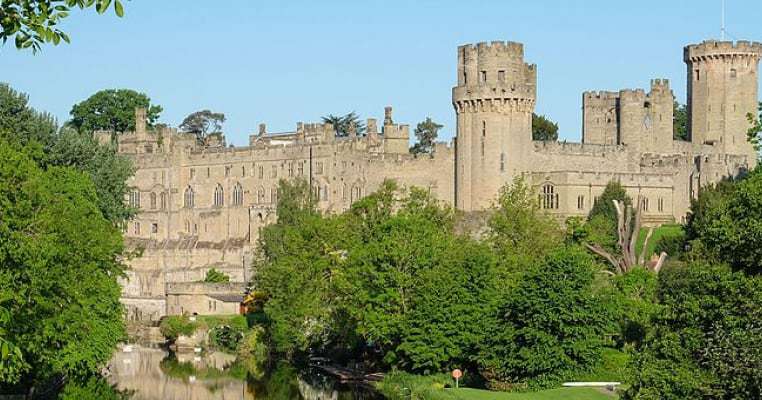

Caernarfon Castle
Caernarfon Castle is the first Welsh castle on the list, and has its origins with the great castle-builder William the Conqueror. Having subdued England, William turned his attention to Wales and Ireland, and by 1086 (the time of the Domesday Book) Northern Wales was under Norman control. The Domesday ruler, Robert of Rhuddlan, was killed by the Welsh in 1088, and his cousin Hugh d’Avranches succeeded him and reasserted Norman rule by, of course, building castles. One of these establishments was a motte and bailey castle at Caernarfon, which was captured for the first time by the Welsh in 1115.
This change of ownership from English to Welsh set the tone for the medieval history of Caernarfon Castle. War broke out between the countries in 1282, and the Welsh suffered under the brutal military campaigns of Edward I, who cut his martial teeth in the conflict in preparation for subduing Scotland later in his reign. He took Caernarfon back from the Welsh, and set about turning the rudimentary motte and bailey castle into a 13th-century masterpiece. Inspired by the great fortifications he saw in the Holy Land whilst on crusade, Edward’s new castle was instrumental in asserting rule in Wales.
The new castle was so large that parts of the town of Caernarfon had to be demolished, and the whole settlement was surrounded by a strong defensive wall. Edward garrisoned his new castle with 40 men, the most of any Welsh castle. Mid-construction, however, Caernarfon Castle was damaged by Welsh rebels led by Madog ap Llywelyn, and large parts were burned to the ground. It was rebuilt and completed at great cost by 1330. Though its size and strategic importance made Caernarfon Castle the target of many sieges during the Glyndŵr Rising (1400-15), once finished the castle was never taken.


