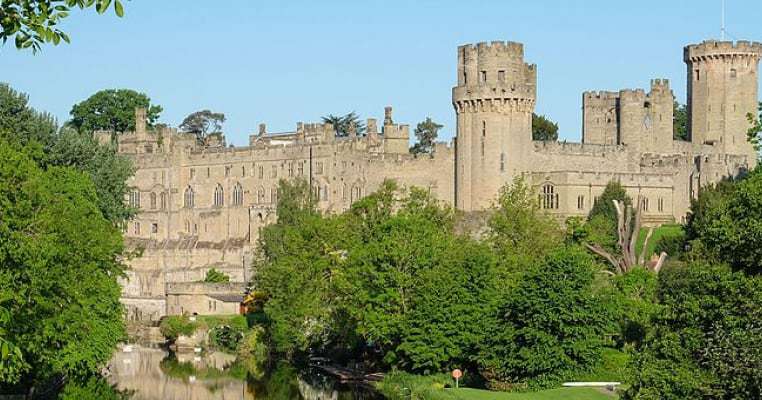

Hever Castle
Looking at this splendid residence today, it is hard to imagine how it looked when it was first built in 1066. The land was given to Walter de Hevere by William the Conqueror, and permission was given to build a motte and bailey castle, a large manmade mound topped by a simple keep in which the aristocrats lived surrounded by a ditch overlooking a fenced and ditched courtyard containing kitchens, barracks, and a great dining hall. It was only in 1271 that a fortified stone castle was erected, with the moat, curtain wall, and present dining hall following around 1383.
In 1459, the then-fashionably-whitewashed castle fell into the hands of one Sir Geoffrey Bullen, Lord Mayor of London. He set about turning it into a comfortable manor house, whilst retaining the crenellated features and the ‘castle’ part of the name. Bullen was the grandfather of Anne Boleyn, second wife of Henry VIII; the family modified the family name around the time of Henry’s courtship of Anne. She had grown up at Hever, and it remained her most beloved residence. Cruelly, after beheading Anne, Henry seized Hever and later included it in his divorce settlement to Anne of Cleves.
In 1557, Hever Castle was given to the staunchly Catholic Sir Edward Waldegrave (1517-61) by Queen Mary I. Waldegrave spent a year in the Tower of London after refusing to cooperate with the ban on Princess Mary hearing Catholic Mass after the Reformation. When Mary became queen, she instantly set about returning England to Catholicism in the Counter-Reformation, earning herself the nickname of ‘Bloody Mary’. Whilst Protestants burned alive for heresy, Waldegrave was rewarded for his faith with Hever Castle. When the Protestant Elizabeth I succeeded her childless sister Waldegrave was again imprisoned in the Tower, where he died.
Hever Castle’s unwise alliances continued beyond Edward Waldegrave’s lifetime to the Civil War. Edward had an oratory and priest holes installed to hide Catholic priests during Elizabeth’s reign, and these were used to hide loyal Royalists during the Civil War, when the country was divided between those supporting King Charles I and Parliament. It survived intact, surprisingly, perhaps due to its lack of strategic importance and status as essentially a glorified manor (unlike Corfe Castle – see below). After falling into disrepair in the mid-18th century, Hever was purchased and lovingly restored by William Waldorf Astor, the fabulously wealthy American businessman.


