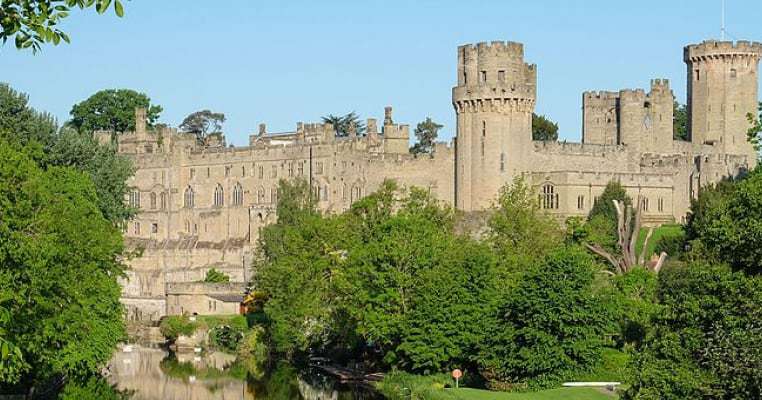

Harlech Castle
Harlech Castle sits atop a spur of rock overlooking the Irish Sea, and is another Welsh castle built by Edward I. The castle was again influenced by fortifications from the Holy Land, and beyond taking advantage of the altitude of this natural topographical feature the architects also built a defensive wall around the spur’s bottom. Building Harlech Castle was a mammoth task: 10% of Edward’s entire expenditure on Welsh castles went on Harlech alone, and the need to build it quickly meant that 546 laborers, 115 quarriers, 30 blacksmiths, 22 carpenters, and 227 stonemasons were slaving away in 1286.
Harlech was also besieged by Madog ap Llywelyn in 1294, a year before it was finished, yet unlike Caernarfon was still strong enough to withstand the attack. The concentric defensive walls, moat, and rock face all meant that Madog could not directly assault the castle, and so he resorted to razing the surrounding areas and attempting to starve the garrison out. However, Harlech’s proximity to the sea was to be its salvation: the heavily-fortified ‘way to the sea’, a steep staircase leading to the coast, allowed provisions to be smuggled in, and the siege was called-off after a few months.
Harlech was not entirely siege-proof, however. During the Glyndŵr Rising, Harlech was to fall to Owain Glyndŵr, and became the headquarters of his military campaign. In the early 1400s, England was troubled by its own internal war, which broke out after Henry Bolingbroke deposed King Richard II and crowned himself Henry IV. Henry would spend much of his reign putting down rebellions against his legitimacy to be king, and thus the Welsh castles were understaffed. At Harlech, which was besieged by Glyndŵr in 1404, the defenders had a mere 3 shields and 6 lances to defend themselves, and soon surrendered.
Things had settled down in England in 1408, when the future King Henry V (a great military leader who masterminded the Battle of Agincourt in 1415) took the castle back by force and starvation. During the Wars of the Roses Harlech was a Lancastrian stronghold, and successfully withstood a Yorkist siege lasting a staggering 7 years (1461-68), surviving through the ‘way to the sea’ and its architectural brilliance before falling to a 10, 000-strong army in 1468. The heroic exploits of the besieged garrison during the longest siege in British history is commemorated in the traditional song, Men of Harlech.


