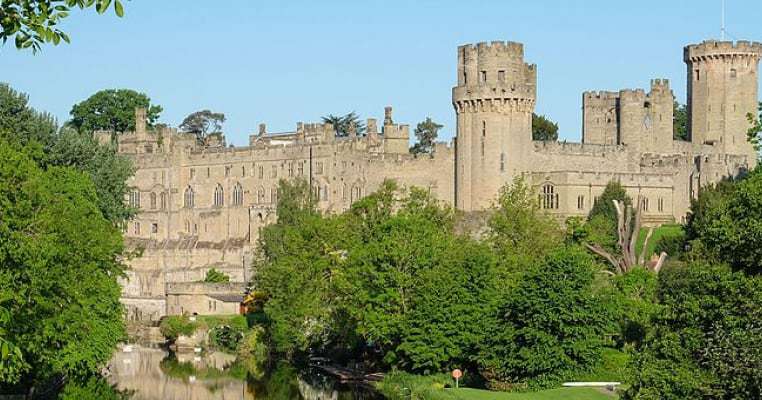

Windsor Castle
Another castle with origins after the Norman Conquest, Windsor Castle is the longest-occupied royal residence in Europe, whose royal connection dates from Henry I (c.1068-1135), the 4th son of William the Conqueror. Occupying 13 acres of land, in its current form Windsor Castle represents a sequence of expansion, rebuilding, and reimagining across nearly a millennium. Since the 14th century the architectural plan has been to imitate antiquated building features in a contemporary fashion, giving it something of a fairytale appearance and the opportunity to tell us something of how a castle was defined across nearly 700 years of occupation.
Fearing for his safety during the tumultuous early 12th century, Henry I abandoned the custom of using Edward the Confessor’s nearby palace in favour of the original motte and bailey castle of Windsor. An added attraction for Henry and his successors was the proximity of the castle to Windsor Royal Hunting Park, which meant that resident monarchs could enjoy both safety and good sport. Edward III (1312-77), spent a record sum of £51, 000 renovating Windsor Castle, and planned to found a new order of the Round Table in imitation of the legendary King Arthur at the castle.
Edward III’s activity at the castle gives a useful demonstration of the purpose of the castle in the medieval period. The great warrior king used the redevelopment of Windsor Castle both to emulate his successful grandfather, Edward I, and to impose the royal authority lost by his weak father, Edward II, who was deposed by his own wife and allegedly executed with a red hot poker up his backside (in imitation of the buggery he was accused of) at Berkeley Castle. Thus he fortified the castle to a great extent, whilst making its interior an intimidating display of royal wealth.
Although Edward’s plans to build a residence for a new order of knights at Windsor failed, the Order of the Garter (as it was eventually called) was revived by Edward IV in the 1460s, who built the still-extant Chapel of St George for members at the castle. The castle’s proximity to the Royal Hunting Park made it very popular with Henry VIII in his vivacious, sporting youth, and he added a tennis court in around 1510. Elizabeth I, his daughter, was drawn to the castle owing to the great security it offered, and spent lavishly on repairing its defences.
The strategic and symbolic importance of Windsor Castle to the Royal Family meant that it was targeted by the Parliamentarian army during the Civil War, who seized it in 1642 and thenceforth used it as a garrison and headquarters. The decoration was deemed too lavish by the largely-Puritan Parliamentarians and by the end of the Civil War 101kg of gold and silver plate had been looted by the occupiers. By the time that the monarchy was reinstated, Windsor Castle was a wreck, and Charles II lost no time in rebuilding and renovating it in the lavish style of French castles.


