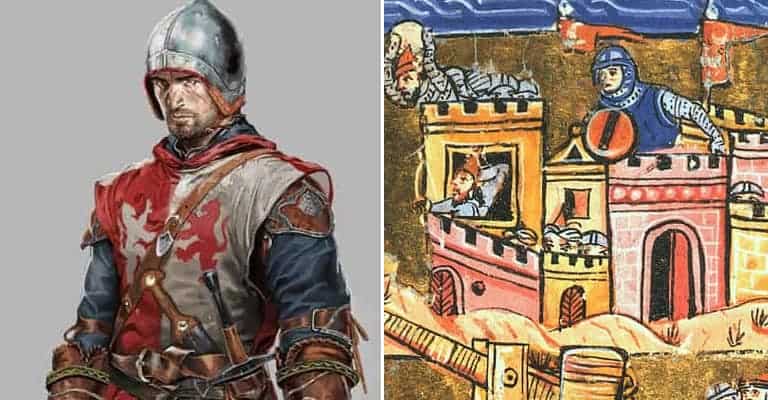

1. You Would Destroy Your Own Land to Discourage the Enemy
When an army was approaching, the leader would often send out an emissary to try to get the opposing force to surrender. Moreover, considering how large these armies were when they were traveling, usually on foot, through long stretches of countryside, there was no hiding when an enemy army was approaching. As such, opposing forces knew when they needed to prepare. They would often burn the surrounding countryside so that the approaching army would have no food. This was only the first step of many that they would take to prepare.
With a siege on the horizon, soldiers would stockpile food and supplies inside the castle so that they could hopefully outlast the surrounding army. They would also dig ditches that they could use to defend their territory, as well as set up pikes and fighting platforms. With the Vikings, however, the game changed. No one knew when a Viking raid was coming, as they came by water and were thereby able to launch surprise attacks. Standing defenses became a way of life to protect against Viking raids. And when they didn’t work, paying bribe money to make the Vikings go away was rarely considered to be beneath the defending army.
Where did we find this stuff? Here are our sources:
“Ekkehard of Aurach: On the Opening of the First Crusade.” Fordham University.
“25 Most Insane Medieval Weapons,” by List25 Team. List 25 History. May 14, 2007.
“Disease in the Middle Ages,” by Ellen Castelow. Historic UK.
“The Bow in Medieval Warfare.” Encyclopedia.com
“Medieval Warfare: How to Capture a Castle with Siegecraft.” Historynet. June 12, 2006.
“Five Fun Facts About Medieval Archery”. Medievalists.net.
“Medieval Sourcebook: Charlemagne: Summons to Army c. 804-11.” Fordham University.
“The Longest Siege in Medieval English History.” English Heritage. June 16, 2016.
“1066,” by Dr. Mike Ibeji. BBC. February 17, 2011.
“Prisoners of War in the Hundred Years War, by Remy Ambuhl”. Cambridge University Press. 2013.
“20 Things Everybody Gets Wrong About the Middle Ages”. History Collection.
“Facts from the Middle Ages that Are Full of Surprises”. History Collection.


