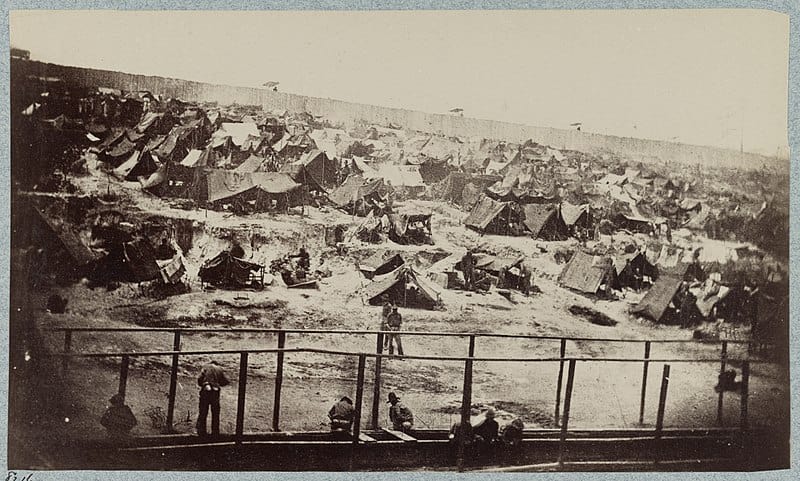

5. Wirz issued little firewood for the prisoners
Captain Wirz justified the existence of the deadline as necessary to protect the wooden walls of the stockade from the prisoners building fires too near them. Though a cookhouse was built within the camp for the preparation of the prisoners’ food, he issued small amounts of firewood for their use. He seems to have been concerned about fire in the prisoners’ hands. By early June, the only rations issued to the prisoners daily was a flour made of coarsely ground corn. The corn was ground still on the cob, and the whole was intended to be mixed with water and baked, or boiled into a pudding. Either way, fire was needed to cook the ration. In the absence of sufficient firewood, many prisoners ate their daily ration raw, either mixed in water or as it came. Many others simply didn’t eat.
They gained little in the way of nutrition, and much in the way of physical ailments. The combination of contaminated water and bad food quickly weakened and sickened the prisoners. By the summer of 1864, poor rations were common throughout the Confederacy, despite relatively good harvests that year. The problem for the Confederacy did not arise from a lack of crops. Instead, the movement of foodstuffs from farms to markets faltered. The Southern railway system by then was near total collapse. Disruptions from Union raids and the confiscation of food for the use of the troops defending Atlanta and Richmond deprived much of the South. Nonetheless, the guards at Andersonville received more and better rations than they provided to the prisoners. Their rations included the fresh vegetables essential to the prevention of scurvy. Scurvy became a leading cause of prisoner expiration in the camp that summer.


