
4. The Confederate guards unwittingly helped contaminate the Stockade Branch water supply
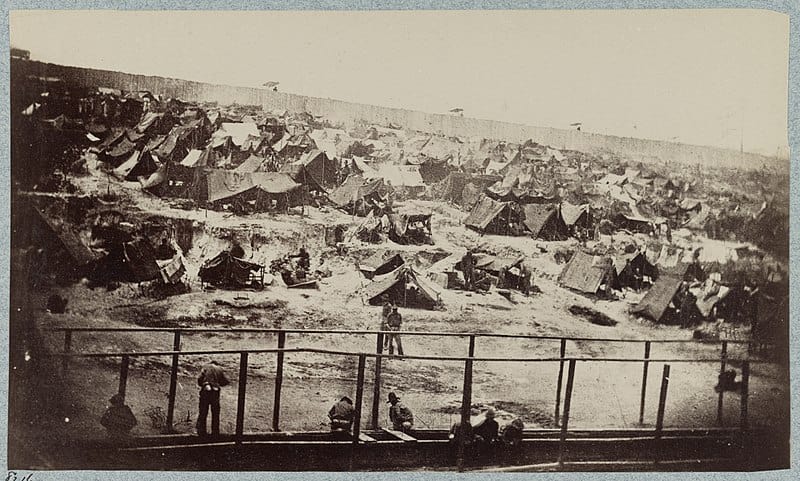
The Stockade Branch crossed Camp Sumter flowing from west to east, thus making the west wall the upstream side, and the east wall the downstream. When the first prisoners arrived they recognized the need to use the only source of water wisely. They made the area closest to the west wall designated for drinking water, along the middle of the compound for bathing. The area closest to the east wall, their downstream section, was designated for use as latrines. Sinks were installed for the purpose. As conditions became more crowded, and the area around the stream became a marsh, the orderly system gradually fell apart. But it didn’t matter. The system was doomed to failure from the beginning. The Confederate guards used the same stream as their source of fresh water, outside the walls of Camp Sumter.
The Confederates’ primary camp at Andersonville stood outside the western side of the compound, and northwest of where Stockade Branch entered the camp. The same branch provided the same uses to the guards as it did to the prisoners. However, the Confederates used the water upstream of their camp for drinking water, alongside it for bathing, and downstream for their latrines. Thus, the latrines of the Confederates, though downstream for them, were upstream of the prisoners. By the time the water flowed into the compound, it was already contaminated. Whether this was pointed out to Wirz by any of the inspecting officers who visited the camp during its existence is undocumented. Any experienced military officer of the day should have recognized the problem. Yet it continued throughout the existence of the camp.


