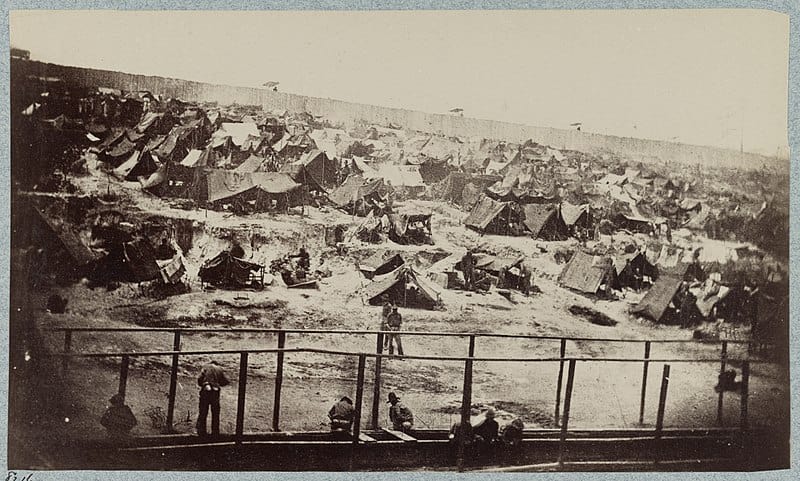

17. Escape attempts continued as the war wound down in 1865
Escapes from Camp Sumter continued and even increased, following the fall of Atlanta. At first, the prisoners were unaware of Sherman’s departure from the area on his March to Savannah. The prisoners believed the relative proximity of Union forces meant the possibility of being picked up by pickets and cavalry patrols. Though many tried, according to Confederate records, few succeeded. Yet a disparity exists between the Confederate records of the number of escapees recaptured and returned and the Union records of successful escapes. It’s possible some escaping prisoners chose to simply return to their homes rather than report to Union authorities. Far more likely is the prisoners died after getting out of the prison. The ruggedness of the terrain, the hostility of the local population, and the fervor with which they were sought all worked against them.
The Confederates had long experience chasing down runaway slaves, and they used the same techniques to recapture escaping prisoners of war. Among the techniques were the use of hounds, to both track prisoners and take them down. Some were mauled by dogs, and in their weakened condition, died of their injuries. By that stage of the war, armed groups of deserters and bandits roamed the South, pillaging, looting, and killing. An escaping Yankee encountering such a group was unlikely to be received sympathetically. The same helds for the local population, which had to protect itself from runaway slaves, roaming bandits, and foragers from both armies. Those who escaped and were caught were often shot by their captors, others returned to the camp died as a result of their harsh punishments.


