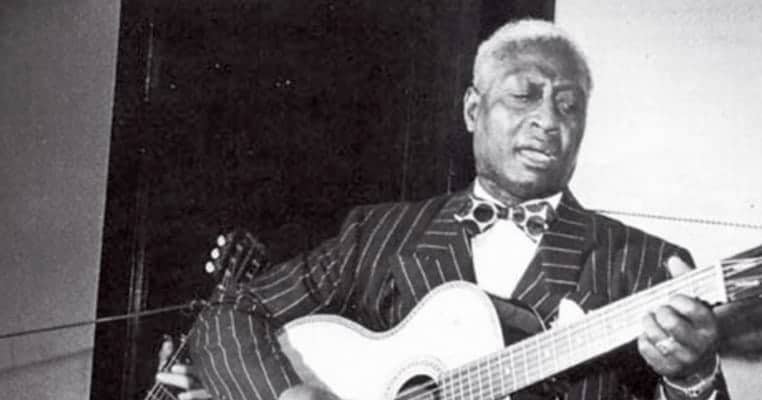
1. His influence on blues and popular music cannot be overstated

Along with the astonishing myth, we have the music to remember Leadbelly by. His songs helped provide the blueprint for some of the 20th century’s most important popular music. Leadbelly’s popularity in England, for example, made him a significant influence on The Beatles, who in turn have influenced countless other bands after them. In fact, in the blunt assessment of George Harrison, ‘no Lead Belly, no Beatles’. His folk numbers, and friendship with Woody Guthrie, paved the way for the folk-blues revival of the 1960s which saw artists as culturally significant as Bob Dylan make their name.
Leadbelly popularised traditional numbers such as House of the Rising Sun and Black Betty that went on to make careers for subsequent artists. Months after Leadbelly’s death, The Weavers had a number one hit with a cover of his version of Goodnight, Irene (albeit censoring some of the more controversial verses). Leadbelly’s music has been covered by a surprising range of artists, including Frank Sinatra, Abba, and the Red Hot Chili Peppers. This is perhaps his greatest tribute: 80 years after his death, the soulful words of a convicted murderer from the Jim Crow South still speak to us.
Where did we find this stuff? Here are our sources:
Brown, Monty, and Marsha Brown. Leadbelly.
Lomax, John A. Adventures of a Ballad Hunter. New York: Macmillan, 1947.
Lomax, John A. Negro Folk Songs as Sung by Lead Belly. New York: Macmillan, 1936.
Lornell, Kip, and Charles Wolfe. The Life and Legend of Leadbelly. New York: Da Capo Press, 1999.
Oliver, Paul. The Story of the Blues. New York: Chilton, 1969.


