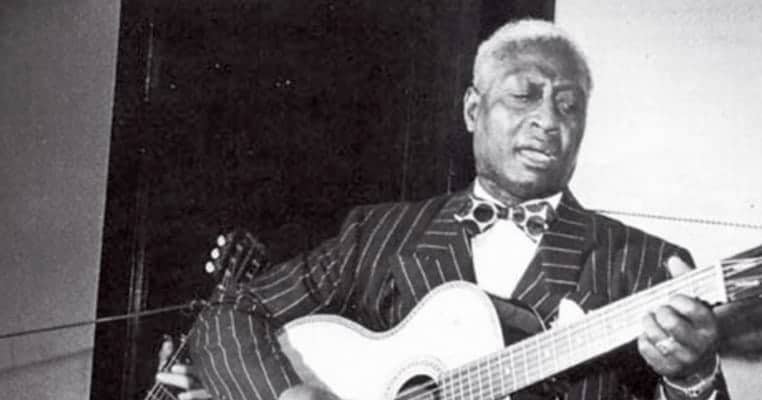
8. But he again sang his way out after a few years, thanks to John Lomax

Angola Prison Farm, Louisiana, was just as notorious for its brutality in 1930 as it is now. It goes without saying that Leadbelly had been sent there for 10 years not just because of prior convictions but because it was a white man he had stabbed. He’d been tried by a white judge and all-white jury, and his ineffective lawyer was, of course, also white, and Leadbelly memorialised the injustice in his song, The Shreveport Jail: ‘[your lawyer] Get some of your money/ Come back for the rest/ Tell you to plead guilty/ For he know it is best’.
Though directing Please Pardon Me to the Governor of Louisiana failed, Leadbelly was to enjoy an enormous slice of luck. For in the early 1930s the pioneering musicologist, John Lomax, was touring the South to record African-American music with his son, Alan. Naturally they heard talk of the incredible singing convict at Angola, and paid Leadbelly a visit. With his knowledge of over 500 traditional numbers, Leadbelly was an invaluable, living cultural artefact, and a mixture of Lomax’s persistent intervention and cost-cutting exercises at prisons during the Great Depression saw Leadbelly once more a free man in 1934.


