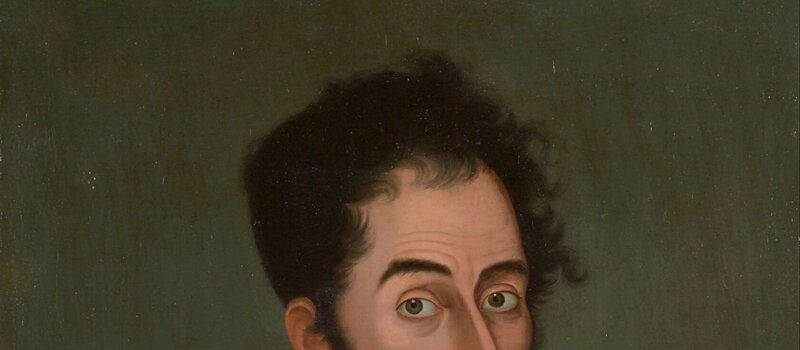
In December 1830, the man who had liberated six nations was dying on a road in the country he had created — gravely ill, coughing blood, too sick to ride and too stubborn to stop moving. Simón Bolívar was forty-seven years old, and he had nowhere left to go.
The Last Ride of the Liberator
He had resigned the presidency of Gran Colombia eight months earlier, in the spring of 1830, when it became clear that the republic he had willed into existence was dissolving around him faster than he could argue it back together. By the time he reached the coastal city of Santa Marta, the union was already fracturing along its seams — Venezuela pulling away to the east, Ecuador falling off to the south, Colombia reconstituting itself as something smaller and angrier than what he had imagined. The Liberator of South America died a refugee in his own creation.
This is not a story that fits neatly onto a commemorative coin. It is something stranger and more instructive: the story of a man whose victories were so total that he believed he could bend political reality by the same force of will he used to cross the Andes. He was wrong, and the wrongness cost him everything. It is precisely this arc — volcanic ambition, staggering military triumph, then a collapse so complete it bewildered even his enemies — that Thomas Cleland Dawson set out to understand in The South American Republics, one of the most searching works of historical analysis written about the post-independence world Bolívar made and failed to hold together.
The Book Behind the Story: What Dawson Actually Wrote
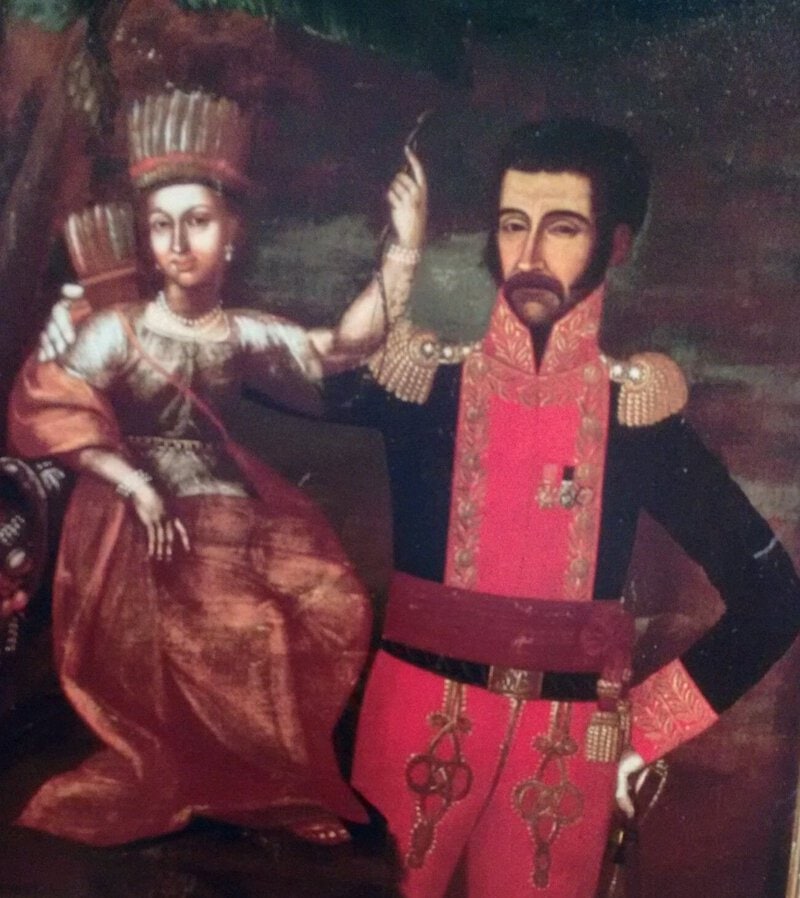
Thomas Cleland Dawson came to the question of South American independence not as a romantic but as a diplomat — a man who had watched governments buckle under the weight of their own constitutions and understood that the distance between a founding ideal and a functioning state could be measured in decades of bloodshed. Published in two volumes in the early twentieth century, The South American Republics examines how newly independent nations tried to build stable governments out of the wreckage of three centuries of colonial rule.
His subject is the machinery of nation-building: militarism, constitutional traditions, the recurring question of whether a republic could survive without a strongman holding it upright. These themes have not aged a day. Dawson writes not as a celebrant of independence but as a diagnostician — his great question is not “how did they win freedom?” but “why was freedom so hard to keep?” That distinction separates his work from the more celebratory histories that surrounded it, and it is why the book remains worth reading well over a century after it was written.
For readers who want to find it today, the options are generous. The complete combined edition is available as an ebook on Amazon, and Apple Books carries the complete work as an affordable digital edition. Those who prefer a physical copy can find a paperback edition through Books-A-Million (ISBN 9781026000748), or a hardcover via Walmart (ISBN 9781023275361).
One Continent, Many Broken Pieces: How South American Nations Were Formed
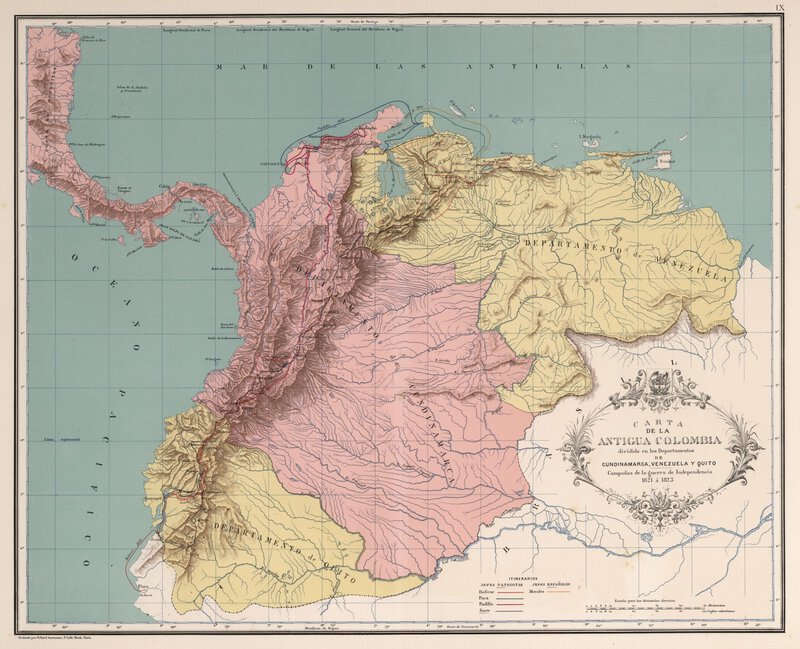
Spain’s American empire did not fall in a single dramatic moment. It dissolved unevenly across fifteen years of war, and each territory that emerged from the wreckage did so with its own army, its own grievances, and its own strongman who believed he had personally won the continent’s freedom and expected to be thanked accordingly. The borders that resulted were often drawn not by any coherent vision of nationhood but by exhaustion and military stalemate — by wherever armies happened to stop fighting.
Bolívar had seen this coming. His famous 1815 “Jamaica Letter,” written from exile when his fortunes were at their lowest, predicted with painful accuracy that Spanish America would splinter into small republics too weak to defend themselves or their ideals. He spent the next fifteen years trying to prove himself wrong. He never quite managed it.
Dawson’s work traces how the geography of the continent itself worked against the kind of central authority Bolívar needed. The Andes do not make administration easy. The Amazon basin was not, in the early nineteenth century, a space that obeyed decrees from distant capitals. The vast pampas of the south operated on their own logic entirely. In a world before telegraphs or railways, governing such distances required either an enormous bureaucracy — which no new republic could afford — or a network of loyal local strongmen, who by definition answered to themselves first. Understanding how South American countries were formed means accepting that geography was as much an adversary as any Spanish royalist army.
Gran Colombia: The Republic That Was Already a Ghost
In 1819, at the Congress of Angostura, Bolívar declared Gran Colombia into existence — a vast union encompassing present-day Venezuela, Colombia, Ecuador, and Panama — and was elected its first president while he was still fighting wars in the field. He accepted the presidency in absentia. It was, in retrospect, an omen: Gran Colombia’s president would spend most of the republic’s short life somewhere other than its capital.
The union was a legal fiction almost from birth. Venezuela’s plains-lords, the llaneros who had fought alongside Bolívar with terrifying effectiveness, had no interest in being governed from Bogotá by bureaucrats they had never met. Ecuador barely knew the republic existed. And Bolívar himself spent the middle years of Gran Colombia’s life in Peru, fighting to complete independence there, leaving the day-to-day government to his deputy, Francisco de Paula Santander.
The Bolívar-Santander relationship is one of the great tragic pairings in South American independence history — the soldier-visionary and the administrator-legalist, each convinced the other was destroying what they had built together. Bolívar believed Santander’s constitutional scrupulousness was an indulgence the continent could not yet afford. Santander believed Bolívar’s willingness to assume dictatorial powers was precisely the habit that would make republics impossible. Both men were partly right, which made the argument irresolvable. By 1826, Venezuela was in open revolt against the union. By 1830, Gran Colombia was legally dissolved. The lifespan of Bolívar’s greatest political creation was barely eleven years — shorter than a single presidential term in a stable democracy, not that South America had many of those to compare it to.
The Militarism Problem and the Constitutional Dream
Dawson identified militarism as what might fairly be called the original sin of South American political development, and his reasoning is straightforward in the uncomfortable way that correct observations tend to be. The men who won independence were generals. Generals had armies. Armies were harder to argue with than lawyers carrying constitutions. The men who liberated the continent were also, structurally, the men most likely to prevent it from becoming what they said they were fighting for.
Bolívar himself was the supreme, agonizing example. He genuinely believed in republican ideals — his letters are full of classical references, his speeches invoke Rome, his constitutions attempt sophisticated separations of power. And yet he repeatedly accepted dictatorial authority when the alternative appeared to be chaos, each time insisting it was a temporary measure. It never quite was. The very military culture he had used to build nations was the culture that made those nations ungovernable — a paradox he understood intellectually and could not escape practically.
His 1826 constitution for Bolivia reveals the depth of his anxiety about this problem. The document included a life-term president and a proposed fourth branch of government he called the “moral power,” charged with educating citizens and punishing public vice. It was rejected almost immediately by the countries he hoped would adopt it. But the document’s strangeness is the point: Bolívar knew that democracy in societies with no established tradition of self-governance could collapse into mob rule or military dictatorship, and he was willing to construct elaborate institutional machinery to prevent it. The machinery just never ran quite right.
Dawson’s examination of these constitutional experiments — the quiet scholarly heart of The South American Republics — shows how each republic tried to solve the same problem with different constitutional architectures, and why most of those architectures failed within a generation. The failures, Dawson argues, were structural rather than merely personal. It is a generous reading that lets no one entirely off the hook.
What the Dream Cost — and Why It Still Matters
Bolívar’s last letter, written seventeen days before his death in December 1830, contained a line that has echoed through South American history ever since.
“America is ungovernable; those who serve the revolution plough the sea.”
He attributed the sentiment not to despair but to clarity — the clarity of a man who had spent decades trying to outrun a truth he had always half-suspected. He had liberated Venezuela, Colombia, Ecuador, Peru, Bolivia, and Panama. He had crossed the Andes in winter with a ragged army and defeated an empire. He had written constitutions, convened congresses, and negotiated alliances with the controlled ferocity of a man who believed that if he simply refused to stop, history would eventually cooperate. It did not cooperate. Multiple republics rose from the ground where one united nation was supposed to stand, and the man who had made all of it possible died on a coastal road with nothing left to govern.
Dawson’s The South American Republics is ultimately a book about that distance — between the founding ideal and the political reality, between what Bolívar imagined and what the continent was willing or able to become. His analysis is cool where Bolívar was passionate, precise where the Liberator was visionary, and it is exactly that counterpoint that makes the two read so well together: the dream and the careful reckoning with what the dream cost, placed side by side.
For modern readers, the book’s value lies in its refusal of easy heroes or clean villains. Independence was real. The vision was real. The suffering that followed — the decades of coups, competing constitutions, and generals-turned-presidents — was equally real, and Dawson measures all of it with the patience of someone who understood that political failure is never simple. His work asks what remains the most important question in South American independence history: not whether freedom was won, but whether it was ever truly possible to hold.