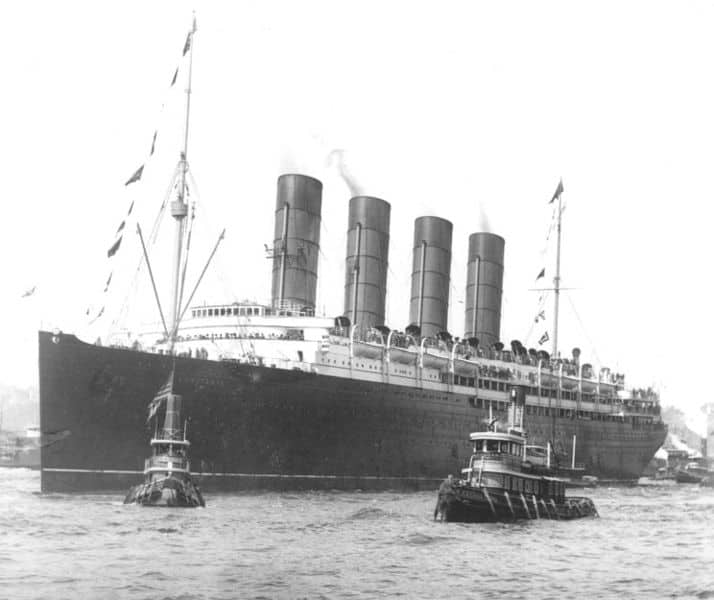
20. The Admiralty did little to protect Lusitania as it approached the Irish Sea

The presence of German submarine U-20, as well as other U-Boats, were known to the British Admiralty as Lusitania drew near the British Isles. U-20 had attacked several ships, some successfully, in the general area where Lusitania was to traverse. Yet the Admiralty did nothing to protect the liner as it approached. The ship could have been ordered to alter course to the north, going around the top of Ireland on its way to Liverpool. No such orders were given. Several destroyers were available in the channel ports, which could have been dispatched to escort the liner through the danger zone. No escort was offered. The ship was left to its own devices in waters where known submarine activity had recently occurred.
The First Lord of the Admiralty, the man who ran the Royal Navy at the time, was Winston Churchill. It was Churchill who pushed to place the blame for the loss of the ship on Captain Turner at the subsequent investigations, supported by the First Sea Lord, Admiral Jackie Fisher. Both Churchill and Fisher were informed of the submarine activity; they ordered an increase in escorts for the battleship Orion, but none for Lusitania. The inaction by the leaders of the British navy led to speculation among historians that Churchill’s actions were deliberate, leading to the major disaster which he had previously remarked would be necessary for America to enter the war.


