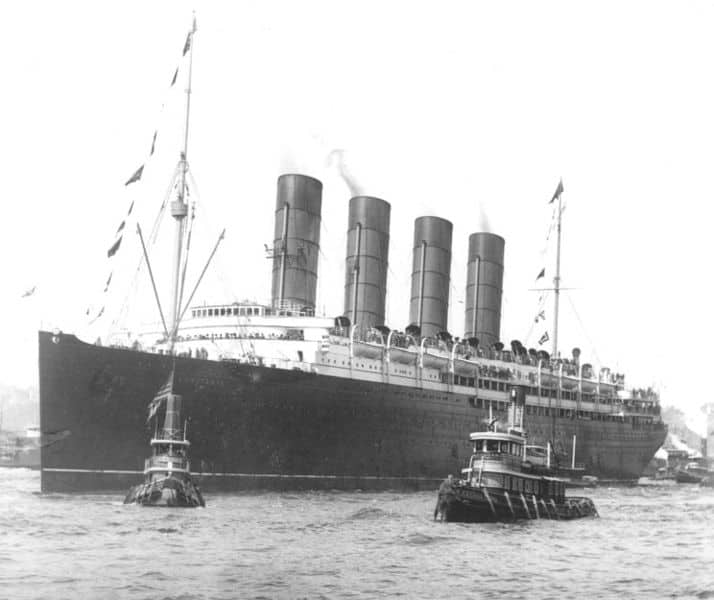
18. Parts of the Lusitania’s manifest were kept secret for decades

A copy of the manifest for Lusitania’s final voyage – the list of everything carried aboard as cargo – is held at the Franklin Delano Roosevelt Presidential Library and Museum, at Hyde Park in New York. Roosevelt was Assistant Secretary of the Navy at the time of the investigation into the sinking held in the United States. According to the manifest, 148 tubs of butter were being carried in the hold near the point where the torpedo struck, and where the second explosion occurred. The butter wasn’t provided by Borden, or by any other American dairy. It was provided by Remington Arms, which also shipped the small arms ammunition at the same time.
Remington shipped the “butter” (unrefrigerated) on behalf of its parent, E. I. duPont de Nemours, which was not in the business of making and shipping butter. But they did manufacture guncotton, which when exposed to seawater becomes extremely volatile. Guncotton still present in the wreck explains why in 1982 the British government warned salvage divers the ship could “literally blow up on us”.


