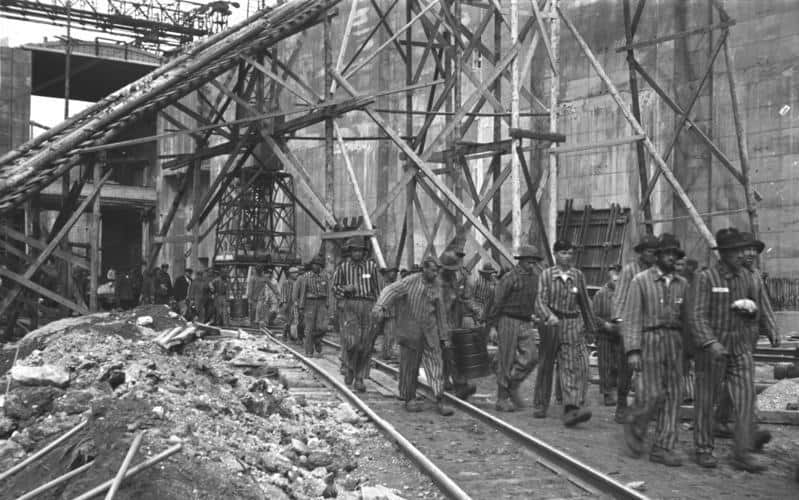
24. By 1942, the prisoners could receive packages from the outside world

In October 1942, Himmler realized the number of deaths of prisoners in the labor camp system was problematic. It was making the labor camp system inefficient and costly for the Reich. Rather than increase the costs of feeding the prisoners by purchasing additional food, he ordered that prisoners be allowed to receive packages in the mail. But, in some camps, food could be sent to prisoners either by relatives or organizations. One such organization was the International Red Cross. Red Cross packages were frequently intercepted by the SS or the Kapos. They ransacked the packages for whatever they contained. A Kapo could be shot for it.
Nonetheless, in some camps, the reception of packages meant the difference between survival and death. It also led to the development of black markets within the confines of the camps. Food and other items sent in, such as cigarettes, traded briskly among the prisoners. Such trading could only take place at night, during the brief time between returning to the barracks at the end of evening roll call and lights out. After lights out, anyone not in their assigned bunk or sleeping place was liable for immediate discipline by the guards.


