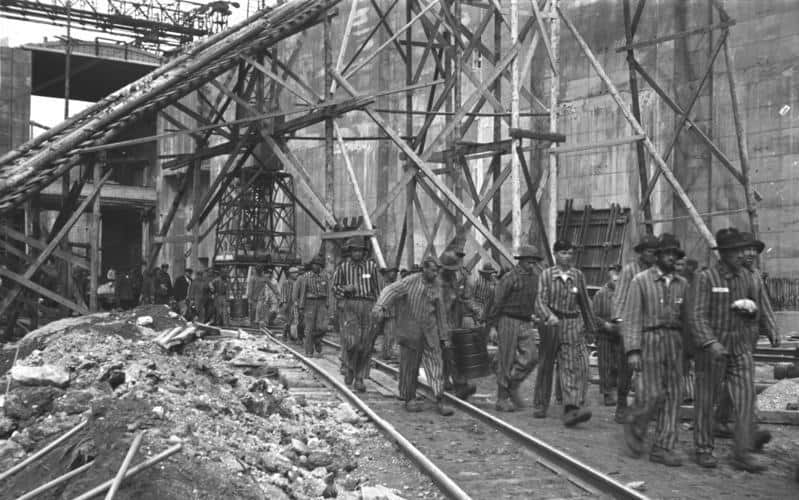
3. Prisoners were sent to the camp in a variety of ways

The most commonly depicted means of prisoners arriving at the camps was by train, though before the war and the expansion of German-controlled territory, other means were more common. Camps deemed close enough to allow it was arrived at by walking, escorted by SS guards who typically rode. Prisoners walked while carrying what personal possessions the Nazis allowed them to keep. Others rode by truck, and before the outbreak of hostilities were usually fed and given sufficient water for the trip, which was punctuated by relief breaks as the guards deemed necessary.
Those arriving by train were sent in boxcars, often packed to the point of being forced to stand, though this practice began to emerge only after the camps to the east were opened. Prisoners were seldom told where they were going, though many knew. Once the Final Solution was underway there was little incentive for the SS to provide food, water, and in winter time heat, since only the hardiest were going to survive the journey and be of any use to the Nazis upon arrival at the camps. The rest were destined for immediate disposal.


