Back to the front page
American History

When US and German Soldiers Fought Together and Lesser-Known World War II Events

Itter Castle - Battle of Castle Itter
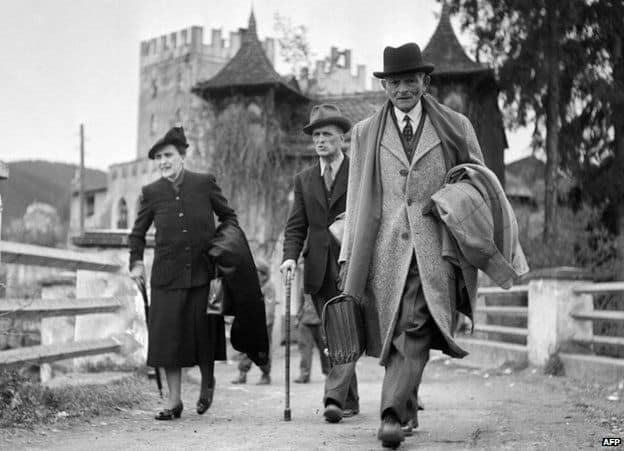
The French Army's former commander in chief, Maxime Weygand, leaving Itter Castle. Agence France Presse

26. Secrecy and Frugality Set the Stage for Disaster

Test during which the magnetic detonator used in the Mark 14 Torpedo failed to explode beneath the target, and the torpedo continued on. Wikimedia

The Mark 14 Torpedo’s concept of exploding directly before a target ship’s keel was good. It meant that a single Mark 14 would theoretically suffice to sink an enemy ship, regardless of size. Its predecessor, which relied on an impact detonator, usually required multiple torpedoes holing the enemy in various spots on the hull.

However, secrecy and frugality led to the live testing of only two torpedoes – and one of the two had been a failure. A 50% test failure rate however did not give the US Navy pause and prompt it to conduct further testing. Nor did it keep the Navy from approving the Mark 14 and issuing it to the US submarine fleet as its standard torpedo in 1938.

Written by

A lifelong history buff, I developed a particular passion for WW2 history as a child, when I spent hours listening to my grandfather, enraptured, as he recounted his wartime experiences in the British East African Campaign and with the British 8th Army in North Africa.

I graduated with a history BA from George Mason University, then went on to get a JD from the University of Virginia School of Law. After lawyering for a decade, I moved to sunny Rio de Janeiro and a less demanding career, opening a tourism agency in Copacabana.

A big chunk of my free time is spent blogging (you can follow me on Quora https://www.quora.com/profile/Khalid-Elhassan ) or freelance writing, mostly about my favorite subject, history.

Keep reading

Advertisement