Somewhere in a Polish field, a college student in an ROTC uniform kneels in the dirt and sifts soil through a screen, looking for the bones of a man who never came home from World War II. That image — young soldiers learning to find old ones — captures something essential about a quiet, decades-long mission that spans crashed bombers in the Pacific, forensic labs in Hawaii, and living rooms where elderly relatives swab their cheeks to give a name back to a grave. What follows is a close look at the scientists, veterans, agencies, and emerging technologies carrying that work forward.
The Defense POW/MIA Accounting Agency: America’s Full-Time Mission to Reclaim Its War Dead
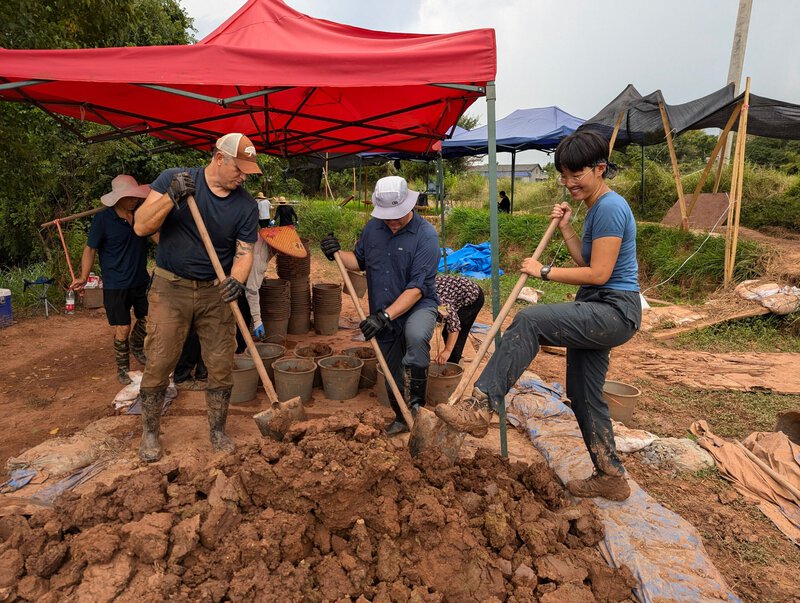
The Defense POW/MIA Accounting Agency (DPAA) carries a caseload unlike any other federal office: more than 72,000 Americans still unaccounted for from World War II alone, plus thousands more from the Korean War, Vietnam, and other conflicts. Its mandate is to search for, recover, and identify every one of them — a mission with no clean finish line. In a record-setting recent year, the agency accounted for 250 missing service members, 198 of them from World War II. Each resolution meant a family finally received an answer instead of a silence stretching back generations.
The core method is forensic archaeology — excavating crash sites, battlefield graves, and jungle hollows with the same evidentiary discipline used in criminal investigations. Every bone fragment, corroded dog tag, and scrap of uniform becomes a legally and historically defensible data point. DPAA mortuary teams fan out across former theaters of war on the strength of archival tips, satellite imagery, and witness accounts, treating each dig as both a scientific excavation and a promise kept to the service members who went before them.
David Brown: The Soldier Who Always Wanted to Be an Archaeologist — and Became Both

David Brown grew up in Hoffman Estates, Illinois, and decided at age eight that he wanted to be an archaeologist. Life detoured him through military service first, and that detour turned out to be the making of him as a recovery specialist. Where a purely academic archaeologist sees a hillside, Brown sees a defensive perimeter; where others see a drainage ditch, he reads a hasty retreat. His dual fluency — soldier and scientist — lets him reconstruct not just where remains might be, but why a unit ended up there in the first place.
Brown now applies his archaeology training directly to MIA recovery work for the U.S. Army, moving between the analytical demands of stratigraphic excavation and the intuitive terrain-reading that combat experience sharpens over years. His story is an argument that military culture is itself a form of field knowledge: understanding how soldiers move, think under fire, and bury their dead makes the archaeologist’s hypothesis sharper before the first trowel breaks ground.
ASU ROTC Cadets in Poland: When Future Officers Learn to Excavate the Last War
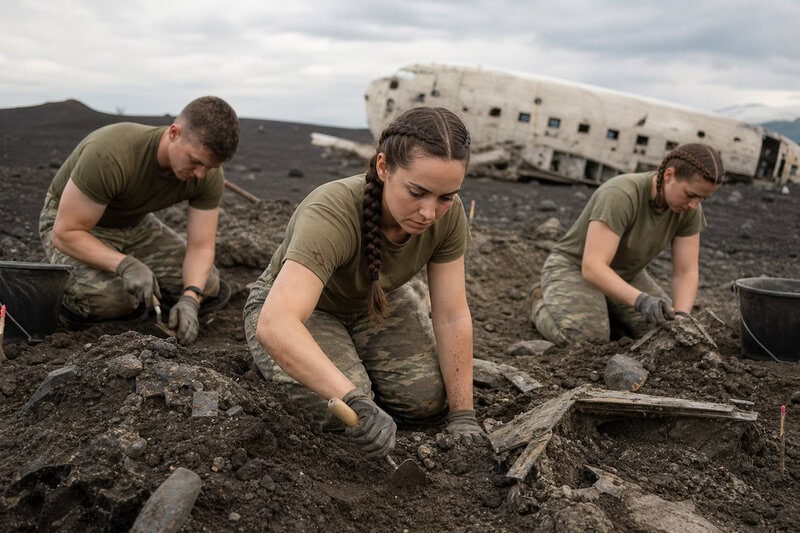
Three Arizona State University ROTC cadets spent three weeks in Poland at the crash site of a World War II bomber — not as observers, but as working excavators. The study-abroad program is built around military MIA accounting, pairing officer training with the hands-on realities of forensic archaeology in a way that few curricula anywhere attempt. Sifting soil for aircraft fragments, personal effects, and human remains, the cadets were doing real recovery work, not a simulation.
The pedagogical argument behind the program is a serious one: future military leaders who have personally felt the weight of a human bone in a sieve will understand differently — and more viscerally — the promise the U.S. government makes to every service member who enlists. That promise is that the country will come back for them. Learning to dig is learning what honoring that promise actually costs in patience, precision, and sweat.
The Battle of Saipan’s Vanished Sailors: Searching for the Missing Beneath the Pacific
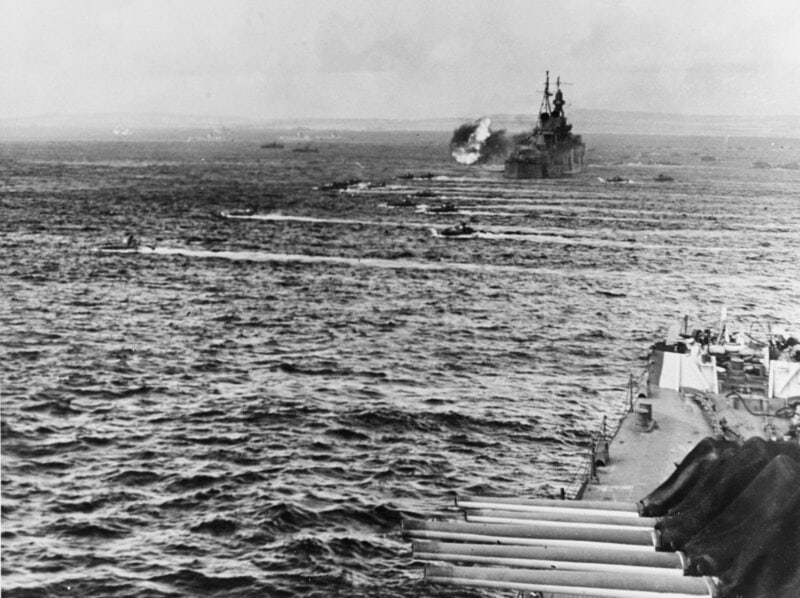
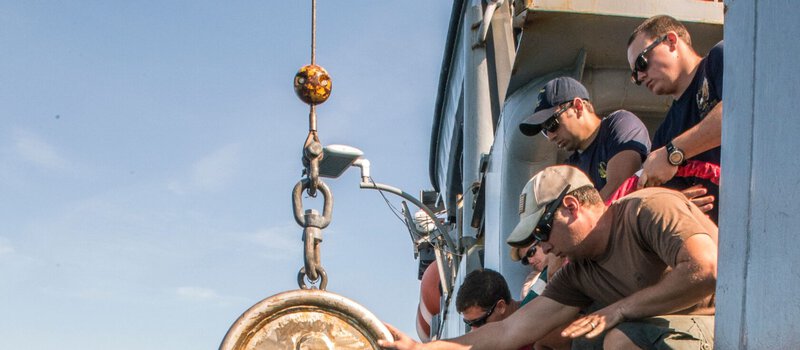
For three weeks in June 1944, bombs rained down on the island of Saipan, then an important Japanese stronghold in the western Pacific. The campaign left an unknown number of service members missing — not buried on a hillside where soil might preserve them, but lost at sea in the western Pacific, where the ocean keeps its dead with particular jealousy. Unlike a land battlefield with its stable stratigraphy and artifact layers, the seafloor offers an ever-shifting, corrosive environment that destroys the conventional tools of forensic archaeology.
Saipan’s missing sailors represent perhaps the hardest category of MIA cases the DPAA faces: no wreckage on a known grid, no grave to excavate, no surface to survey. The scale of that challenge has pushed scientists toward unconventional thinking, forcing the question of whether the ocean itself might be coaxed into yielding evidence — not through a shovel, but through chemistry.
Environmental DNA at Sea: The Forensic Frontier That Could Rewrite What “Recovery” Means
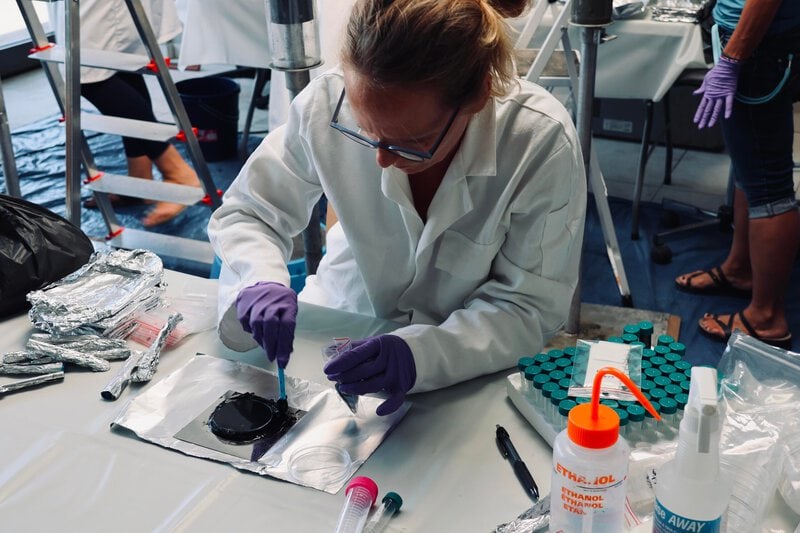
The idea sounds like science fiction: sample a stretch of open ocean or a column of seafloor sediment and find, locked inside it, genetic traces of a human being who died there eighty years ago. Yet that is precisely what researchers are now exploring. Scientists are investigating whether environmental — or “floating” — DNA shed by human remains and preserved in marine sediment could identify troops lost at sea decades or even a century after their deaths. The technique borrows from ecology, where eDNA sampling is already used to detect species that have passed through a habitat without leaving any visible trace.
Applied to MIA accounting, the logic is striking: if a bomber went down in a particular quadrant of the Pacific and human remains dissolved into the sediment below, that sediment may still carry a molecular signature. If validated, the method could give DPAA investigators a tool for cases where no wreckage or skeletal material is recoverable — transforming the ocean from an archive of silence into one the living can finally read. The technique remains experimental, and researchers caution that confirming its reliability in open-water conditions will require extensive further study.
Alta Archaeological Consulting: Private-Sector Expertise in Service of Fallen Soldiers
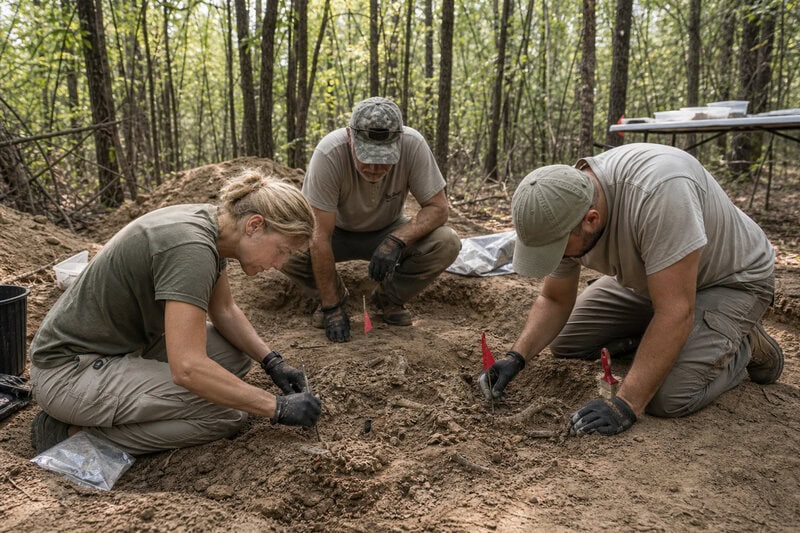
Alta Archaeological Consulting has built its professional identity around a clear priority: recovering the remains and personal effects of fallen service members in a manner that is both scientifically defensible and collaborative. Operating outside the government’s direct chain of command, the firm can bring specialized expertise to sites where military recovery teams may lack capacity, jurisdiction, or the kind of deep regional experience that takes years to develop. That independence also gives Alta a measure of operational flexibility — the ability to move on a lead without the scheduling constraints that can slow a large federal agency.
What distinguishes Alta’s approach is a rigorous insistence on documentation: controlled excavation, meticulous recording of artifact provenance, and an unbroken chain of custody from the moment a bone fragment or identification disk leaves the ground. That discipline is not bureaucratic fussiness — it is what allows findings to survive legal scrutiny, to hold up if identity or ownership is ever contested, and to give families confidence that what they are receiving is genuinely their soldier.
UCLA’s Community-Engaged Archaeology Partnership with the DPAA
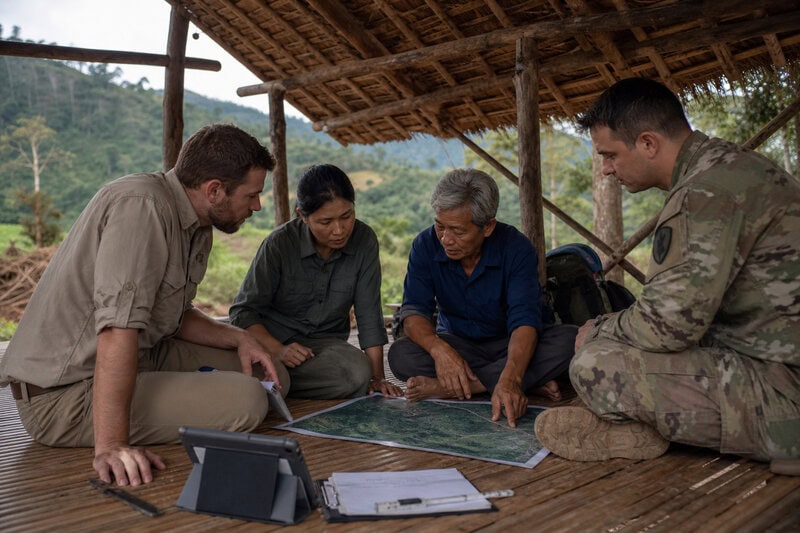
UCLA archaeologists have built a working partnership with the DPAA around a conviction that the people who live near former battle sites are not obstacles to be managed but collaborators to be recruited. Residents of villages that witnessed a firefight in 1944 may know exactly which hillside the Americans fell on — knowledge that no satellite image or declassified military map will ever fully capture. Oral histories, locally held artifacts, and land access controlled by families who have farmed the same ground for generations can all unlock leads that academic and government researchers would otherwise never find.
The UCLA model reflects a broader shift in forensic archaeology toward transparency and shared investment in outcomes. The families of the missing have an obvious stake in every excavation; so do the communities that buried American dead in emergency graves or watched planes go down in their fields. Treating both groups as genuine partners rather than passive informants changes what investigators learn — and builds the local trust that makes future digs possible.
American Veterans Archaeological Recovery: Turning Veterans Into the Archaeologists Who Find Their Brothers
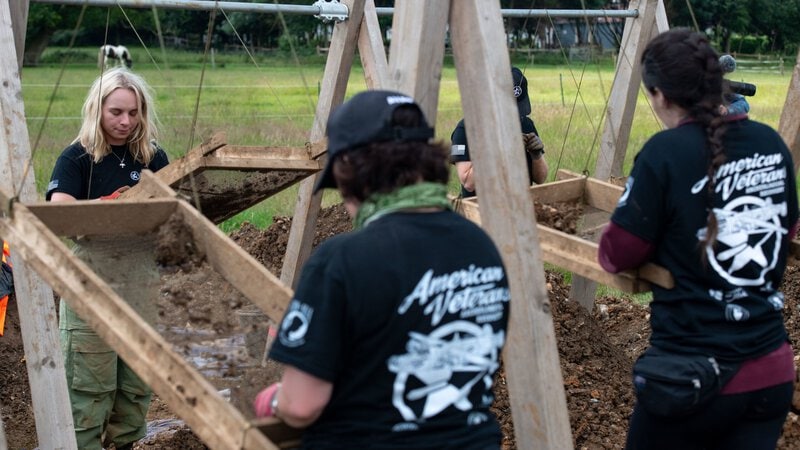
American Veterans Archaeological Recovery (AVAR) was founded on a pointed observation: the people who most intuitively understand why a unit moved the way it did, why a squad made camp in a particular location, or why a soldier might be buried in one spot rather than another are people who have served in a military unit themselves. AVAR trains veterans in the technical disciplines of archaeology — bone identification, artifact documentation, the reading of soil layers — so they can participate directly in recovery digs rather than watching from the sidelines. The result is a practitioner who arrives at a site already fluent in the culture of the people buried there.
The model addresses two problems simultaneously. The mission of accounting for America’s missing dead is massive and chronically under-resourced; every trained pair of hands in a trench matters. At the same time, veterans who struggle to find meaningful civilian work after service gain a concrete, purposeful way to honor — and find — the peers their generation lost. The shovel, in AVAR’s framing, becomes both a tool and a form of witness.
DNA from the Living to Name the Dead: How Family Samples Close Cold Cases
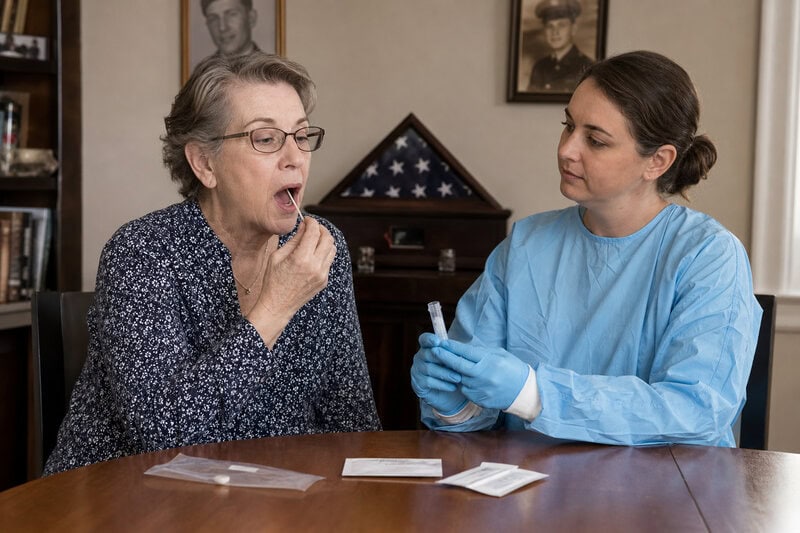
The last piece of the identification puzzle is often the simplest in concept and the most emotionally freighted in practice: a cotton swab, a small tube, and a living relative willing to contribute their genetic material to a database that might one day match it to bones recovered from a Pacific beach or a European forest. The science works because mitochondrial DNA passes largely unchanged through maternal lines across generations, meaning a grandchild or great-niece can genetically corroborate the identity of a grandfather who died before their parents were born. Relatives of service members still listed as missing are eligible to submit samples; families interested in contributing can register through the DPAA’s World War II family reference database.
Every new sample submitted quietly expands a reference library that makes future recoveries more likely to end with a name rather than an “Unknown.” The bureaucratic act of mailing a swab becomes, in that light, a potential act of rescue — a living person reaching back across decades to give a fallen soldier the last thing still owed to them.
From a federal agency fielding hundreds of cases a year to veterans learning to read soil strata, from eDNA sampled in open ocean to a great-niece’s cheek swab, the effort to find and identify America’s missing war dead is vast, methodologically inventive, and driven by a conviction that no loss should simply be absorbed into silence — that every name deserves, eventually, to be spoken aloud again.