Back to the front page
American History

When US and German Soldiers Fought Together and Lesser-Known World War II Events

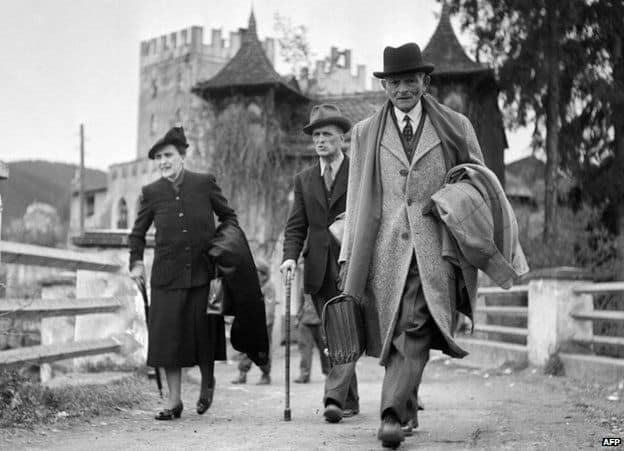
Itter Castle - Battle of Castle Itter
The French Army's former commander in chief, Maxime Weygand, leaving Itter Castle. Agence France Presse

17. A Trend-Setter Tank

Comet tank in Germany, 1945. Imperial War Museum

Entering service in 1944, the Comet’s superiority over the Panther was not limited to firepower. While the Panther had thicker armor, was roomier, and carried more ammunition, the Comet had a lower profile and was mechanically sounder. Its Rolls Royce Meteor engine – a conversion of the Merlin engine that powered P-51s and Spitfires – was far more reliable than the Panther’s Maybach engine.

The Comet’s Christie suspension system was also more durable than the Panther’s. Weighing 11 tons less than the Panther, while powered by an engine that produced equivalent horsepower, the Comet had a better power-to-weight ratio that gave it greater acceleration and made it 6 mph faster. Comets continued in British service until 1958, and with other militaries until well into the 1980s. The Comet led directly to the development of the Centurion, Britain’s primary tank of the post-WWII era.

Also Read: Epic Tank Battles in History.

Written by

A lifelong history buff, I developed a particular passion for WW2 history as a child, when I spent hours listening to my grandfather, enraptured, as he recounted his wartime experiences in the British East African Campaign and with the British 8th Army in North Africa.

I graduated with a history BA from George Mason University, then went on to get a JD from the University of Virginia School of Law. After lawyering for a decade, I moved to sunny Rio de Janeiro and a less demanding career, opening a tourism agency in Copacabana.

A big chunk of my free time is spent blogging (you can follow me on Quora https://www.quora.com/profile/Khalid-Elhassan ) or freelance writing, mostly about my favorite subject, history.

Keep reading

Advertisement