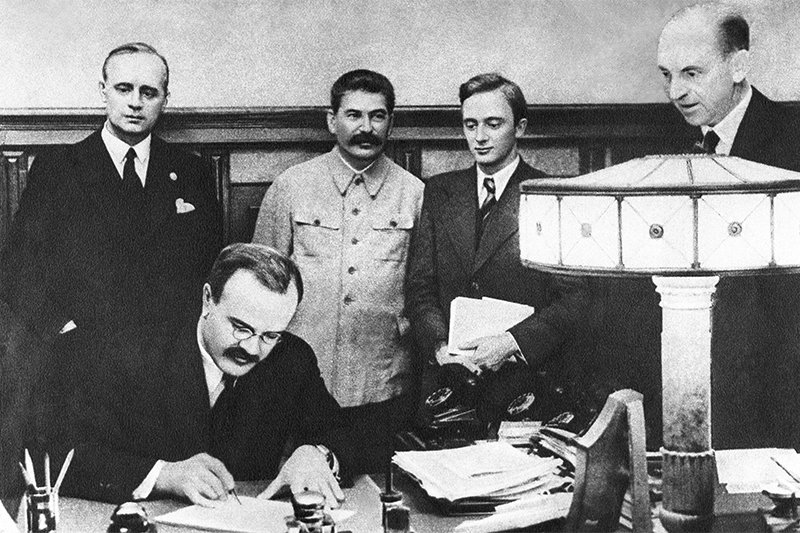

16. As Things Turned Out, the Soviets Were Better Off For Having Signed the Molotov-Ribbentrop Pact
The Molotov-Ribbentrop Pact bought the Soviets nearly two years in which to prepare for war. Poor as the Soviet military’s performance was in 1941, it was even less prepared for war in 1939. Moreover, the Pact, which gave the USSR nearly half of Poland, pushed the Soviet borders hundreds of miles westwards, which gave the USSR that much additional buffer against the Nazis. Space and distance proved decisive to Soviet survival in 1941: the Germans came within 10 miles of the Kremlin before they were turned back. Without the Molotov-Ribbentrop Pact, the Germans would have launched their invasion from a start line hundreds of miles further to the east.

The same effort that ran out of steam within sight of the Kremlin would likely have pushed far beyond had it started hundreds of miles closer to Moscow. As the Soviets saw it, they owed the Western Powers and Poland nothing. Indeed, they had outstanding border claims against Poland. The Germans offered to satisfy those claims, while the British and French offered little. The Soviets were the ones expected to do the bulk of the fighting and dying in a war against Germany. So it struck them as chutzpah for Germany’s foes to offer so little in exchange for the high price the USSR would pay if it sided with them, rather than develop a relationship of benevolent neutrality with Germany.


