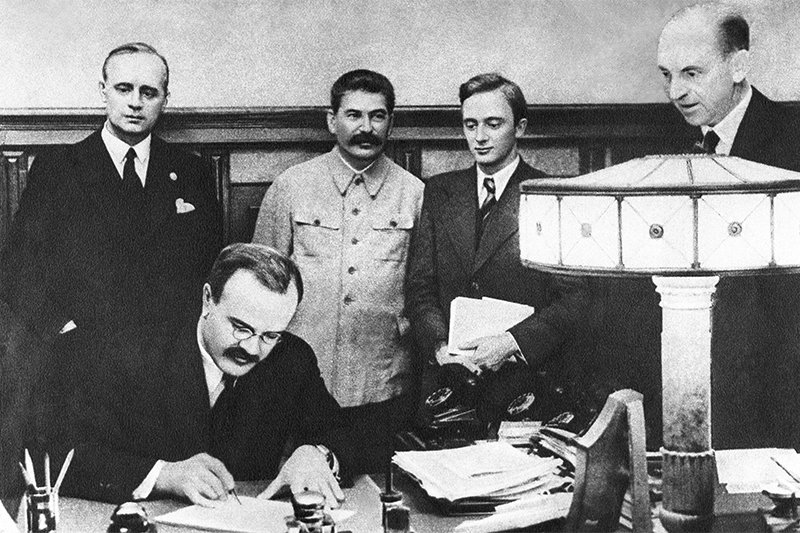

17. From a Soviet Perspective in 1939, the Molotov-Ribbentrop Pact Made Good Sense
From the perspective of the Western Powers at the start of WWII, Britain and France, and from a Polish perspective, the Molotov-Ribbentrop Pact was calamitous. But from the perspective of the Soviet Union, the 1939 German-Soviet Nonaggression Treaty made good sense. The Western Powers had demonstrated their unreliability during the Munich Crisis in 1938. They exhibited a greater distaste for dealing with Stalin than with Hitler. At the time, the Soviets had made solid offers to defend Czechoslovakia, which Hitler threatened to invade, but they were rebuffed.
Instead, the Poles refused the Red Army permission to march through Poland to reach Czechoslovakia, while Britain and France negotiated halfheartedly and wrapped up the affair with an awful diplomatic debacle in which they appeased Hitler by gifting him Czechoslovakia (Now the modern-day Czech Republic). After Munich, the USSR had something to offer both sides. The Germans negotiated seriously and made attractive offers, while Britain and France did not. And the Poles in their dealings with the Soviet Union – the only country whose forces could actually physically come to their defense against the Germans – were astonishingly shortsighted.


