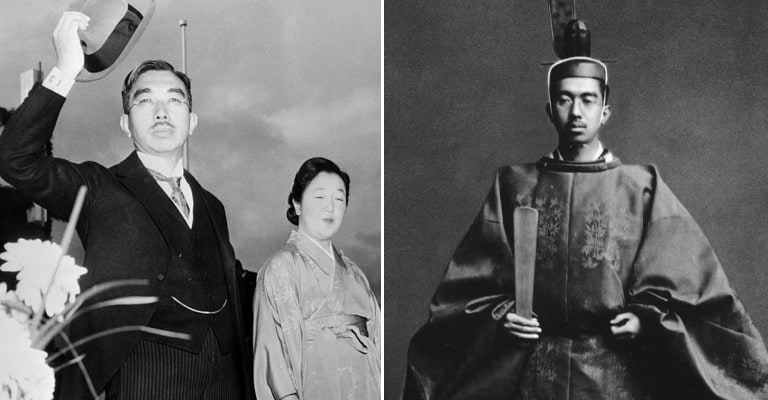
19. Loyalty to the Emperor was instilled as a duty to the divine

From the earliest age, the Japanese people were taught the necessity of loyalty to the Emperor, not only from them, but from all of the world’s races. Those who did not express such loyalty were to be subject to correction or elimination. The ultimate duty of the Japanese people was to bring all races under the benevolent rule of the Emperor in a form of universal brotherhood. Those who opposed were akin to a disobedient sibling, subject to the discipline administered by an elder brother. Thus the fighting in China was justified by the government to the Japanese people.
The atrocities committed by the Japanese in China were hidden from the people by the government and the media in Japan, which was by the mid-1930s wholly controlled by the militarists. They were instead told that the troops and ships of the Empire were engaged in a divinely inspired quest. In practice, the racism which was rife in Japanese society, at all levels, led to the many atrocities which were committed by the Japanese in all theaters of the Pacific War, against all of their enemies. The racism against other races, including the Asian races, was evident in the press as the war in China drew on, and was reflected in official government documents.


