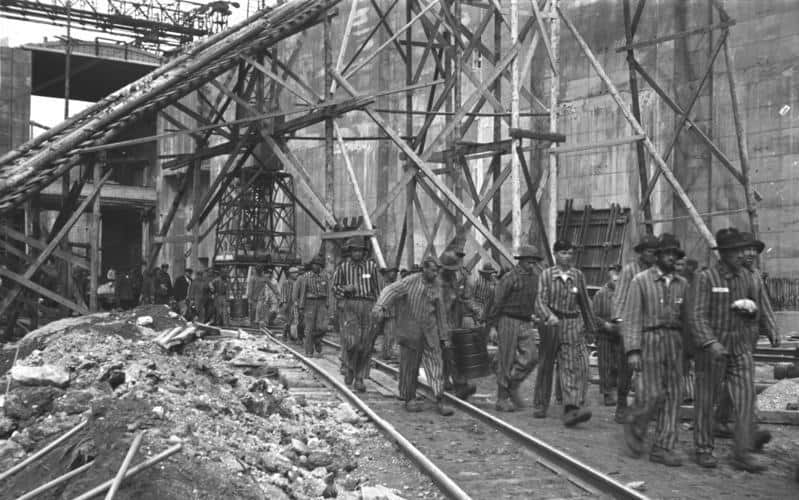
14. There was no free time to speak of in the labor camps

From the minute the prisoners were awakened in the pre-dawn hours to the time they were ordered into their bunks, or wherever they slept, many of them resorting to floors as overcrowding became common in the camps, their time was regimented. Depending on the camp, the sound of a gong, or a siren, or the screams of guards, ordered them to their next activity. Roll calls followed each meal. Dismissal from roll call was an order to work or to barracks. Prisoners were required to maintain their own clothes, an activity which was completed whenever possible, usually in the short time between evening roll call and lights out.
Clothes and clogs were rarely reissued, many prisoners took both from the newly dead in order to maintain their own, a situation frowned on by the Nazis as it helped spread disease. The SS was not particularly concerned with the health and well-being of the prisoners. It was concerned with a decrease in the efficiency of the slave labor leading to a negative impact on their own careers. Deteriorated clogs and ragged clothing worn by a prisoner-led to increased beatings administered by SS guards, hastening death, either through natural causes at the camp or shipment to the death camps.


