9. The Strappado would dislocate your shoulders and most likely kill you
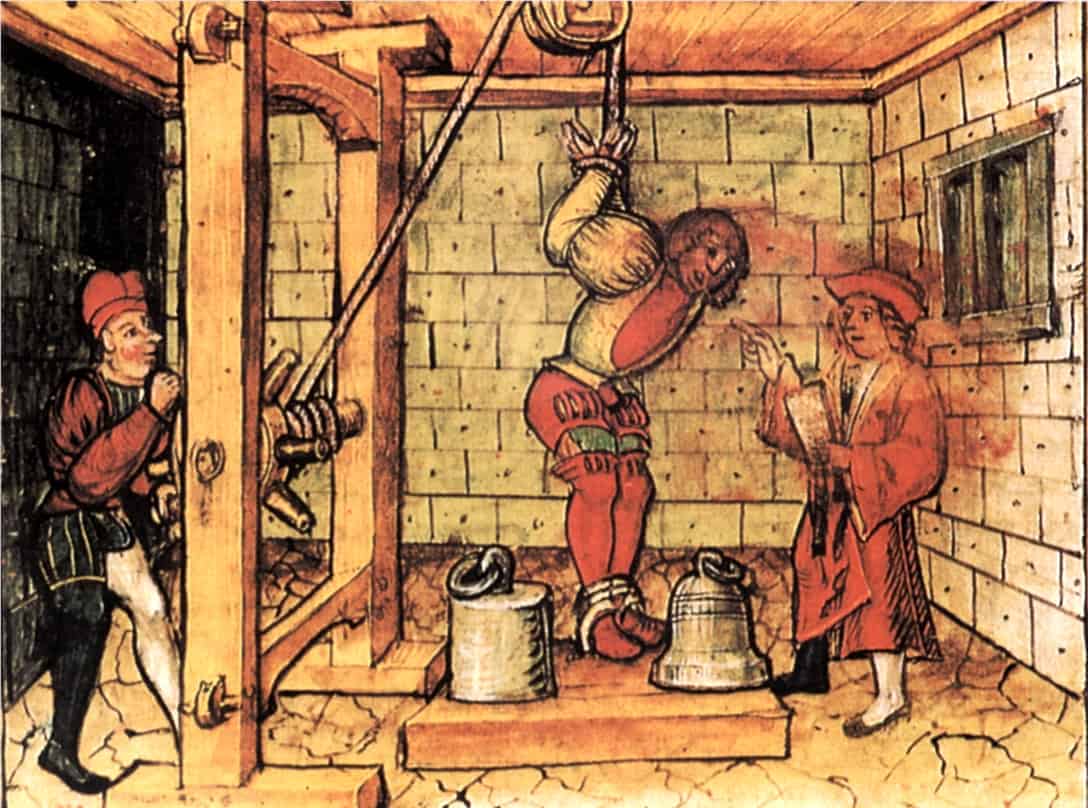
Strappado torture has three variants, all unimaginably horrible. In the first, the victim had their arms tied behind them, with a thick rope tied around their wrists and attached to a beam or hook on the ceiling. The executioner would then simply pull on the rope so that the condemned was elevated upwards by the hands, causing intolerable agony and usually dislocation of the arms and shoulders, the shoulder sockets supporting the body’s entire weight. Weights could be added to the body to make the pain yet graver. Those who survived were often paralyzed or suffered irreparable ligament damage.
The second variant was the same, but for the incorporation of a series of abrupt drops from a great height. The victim’s fall being checked meant painful jerks which would usually break the shoulders. The third variant tied the hands to the front and attached a heavyweight to the bound ankles, resulting in dislocated legs, too. As the name suggests, the Strappado was an Italian invention and is believed to have been used to torture Niccolò Machiavelli and Girolamo Savonarola. The Strappado was also used by the Nazis in concentration camps during the second world war to punish the uncooperative.


