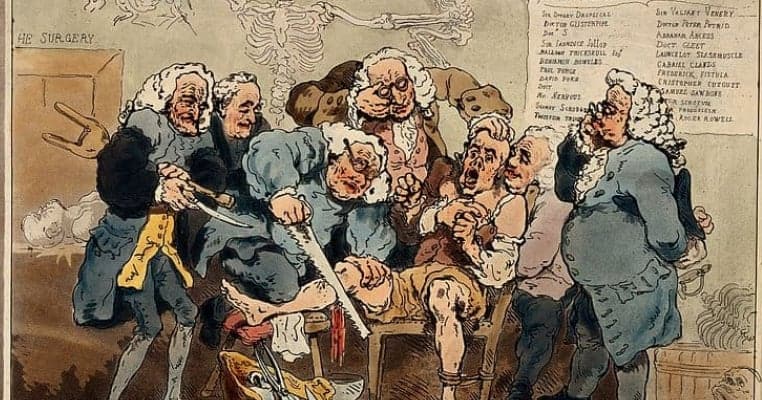

4. There was no such thing as privacy and many operating theaters were packed full of students and even gore-loving members of the public.
According to the medical historian Lindsey Fitzharris – author of The Butchering Art – operating theaters were sometimes known as “gateways of death”. But, far from keeping people away, such a morbid moniker actually attracted huge crowds. Indeed, most surgical operations were public events, and some of the Victorian era’s leading surgeons would draw massive crowds, especially in London. It wasn’t just fellow surgeons who would be keen to watch the gory action. Medical students and even members of the public would also crowd the floor hoping to see blood and guts. Some hospitals even have special ‘theaters’, with crowds of seats above looking down on the operating table.
Of course, this was highly dangerous. The records show that surgeons sometimes had to battle for space with the crowds. Such distractions undoubtedly cost limbs, and probably even lives. However, the biggest risk came from the dirt and the germs such crowds brought into the operating theater with them. For much of the century, nobody washed before going into a hospital and almost everyone kept their street clothes, including their dirt and grime-covered overcoats, on when they watched an operation. Even despite the warnings of the pioneering Dr Liston, this continued right up until the end of the 19th century, meaning many patients lost an arm but got a deadly infection.


