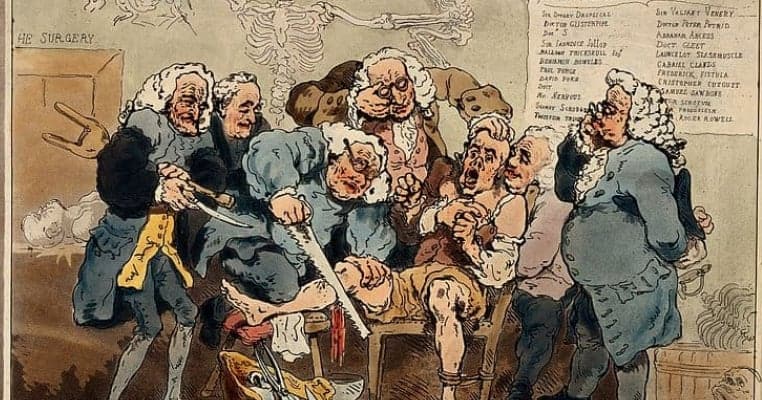

6. Many patients simply bled to death on the operating table, though burning wounds with red-hot irons was designed to stop this.
Amputations were far more commonplace back in the 19th century than they are today. Quite simply, if a fractured bone pierced the skin, the chances are that whole limb would need to be chopped off. The surgery was brutal, painful and very dangerous, especially since the odds of bleeding to death were so high. Victorian-era surgeons did have some methods they used to stop bleeding – and they were the same methods employed by physicians in Ancient Greece or on a Medieval battlefield. Suffice to say, when it came to stemming blood loss, very little progress had been made.
The most common method to stop a patient bleeding to death was to cauterize the stump of a limb. The discarded arm or leg would be tossed into a bucket of sawdust, usually right next to the patient who would get a gory close-up view of their own amputated limb. Then the surgeon would plunge a red-hot iron into the stump, burning the veins and arteries, closing them up for good. This would have been agony for the patient, especially if they had been given zero pain relief. It was also very smelly – indeed, accounts from Victorian-era hospitals often remark on the disgusting smell of burned human flesh.


