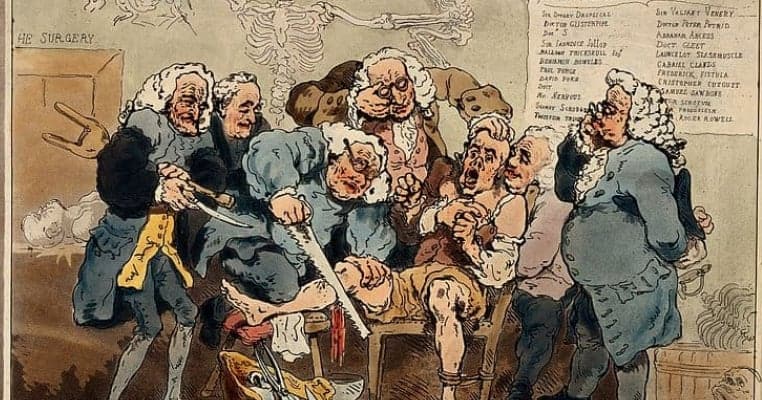

1. It may still have been brutal and risky, but surgery in 1900 was a long way from the grim realities of surgery in 1800
In the field of surgery, as with medicine in general, a lot of progress was made over the course of the 19th century. Indeed, you’d be far happier going under the knife in 1900 than you would in 1800. Above all, thanks to the pioneering work of Joseph Lister in particular, doctors became increasingly aware of the risks posed by infections. Significant progress was made in the area of antiseptic surgery, with surgeons coming round to the idea of sterilizing their tools and scrubbing their hands before performing any operation. What’s more, advances in anesthesia allowed surgeons to perform longer and more complex operations.
By the 1890s, surgeons were wearing clean white robes rather than simply covering their everyday clothes with blood-stained aprons. And surgical instruments had become better, too. Wooden-handled saws had been replaced with saws made out of a single piece of steel, significantly reducing the risk of germs. In operating theatres, watching audiences were out and smooth, easily-cleaned surfaces were in. So, when the Spanish-American War of 1898 broke out, American hospital ships were clean, well-equipped and even fitted with X-ray machines – advances that undoubtedly saved the lives of countless soldiers.
Where did we find this stuff? Here are our sources:
“The Gruesome, Bloody World of Victorian Surgery.” The Atlantic, October 2017.
“Joseph Lister and the grim reality of Victorian surgery.” Science Focus.
“How Ether Transformed Surgery From a Race Against the Clock.” Scientific American, October 2017.
“Brought to life. Exploring the History of Medicine: Anaesthesia.” The Science Museum, London.
“The Victorian Revolution in Surgery.” Science, April 2004.
“The gruesome 19th century surgery that inspired a BBC comedy.” Wired.co.uk, March 2017.
“Surgery in 19th century revealed in gruesome historical documents.” The Independent, January 2016.


