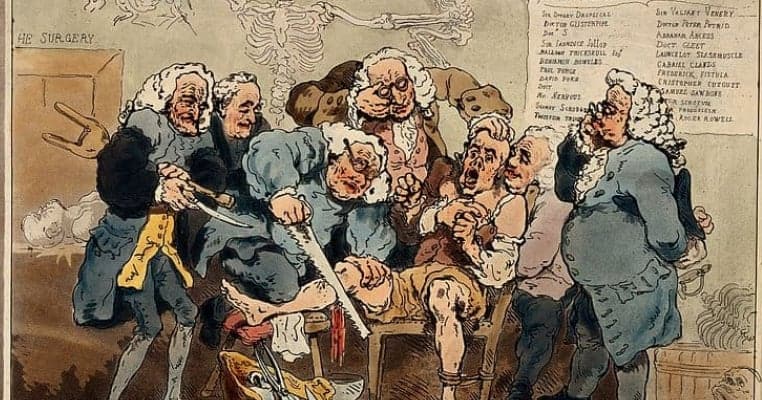

2. The indignity didn’t end if you died on the operating table – your body may have been used for dissection by inept medical students.
The gruesomeness of Victorian-era surgery didn’t even end with the death of a patient. As if the indignity of being cut open, screaming in agony due to a lack of proper anesthetic and then bleeding to death on an operating table in front of a crowd of students and passers-by jostling for a better view of your demise wasn’t bad enough, your dead body would then be cut open some more. In England, the passing of the Anatomy Act of 1832 made digging up corpses a criminal offence. So medical surgeons and anatomy professors had to look elsewhere for specimens – and those poor individuals who never made it out of surgery alive offered the perfect solution.
From the late-1870s onward, advances in embalming meant that bodies could be stored for several months before being used for anatomy classes. These cadavers would also be used for practicing surgical procedures – again, often in front of baying crowds. Though grim, significant advances were made during the 19th century, especially when it came to understanding anatomy. In 1858, the first edition of Henry Gray’s book Gray’s Anatomy was published. The work, which is still referred to today, was based on the dissection of dozens of unclaimed bodies from London’s mortuaries and workhouse morgues.


