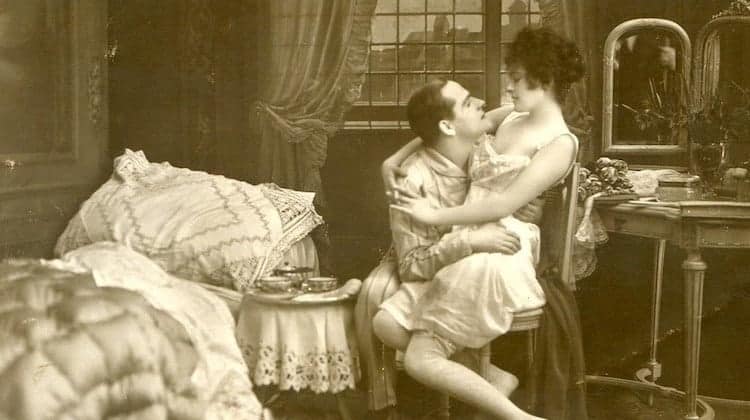
1. “The naughty nineties” were the 19th century version of the Swinging Sixties, as Victorian men and women launched a promiscuous counter-culture

The Victorian era came to an end with the death of the Queen in 1901. Victoria’s death came at the end of the most sexually progressive decade of the era. Not for nothing were they known as the ‘Naughty Nineties’. Far from being kept hidden, intimacy came to the forefront of popular culture. The artist Aubrey Beardsley, for instance, gained fame and notoriety, thanks in no small part to the suggestiveness and eroticism of his drawings. His art reflected the atmosphere of 1890s London, where decadence was on the rise.
It’s believed that the Naughty Nineties were a direct response to the moralizing of the preceding decades. Tired of keeping their desires secret, many men became more open about their lives and practices. Even prosecution didn’t deter the gay men of London from frequenting the growing number of gay clubs and cafes. Moreover, gentlemen who had earned financial independence as a result of the Industrial Revolution were keen to use their money for pleasure, driving the growth of a counter-culture, the likes of which would not be seen again until the 1920s and then again in the 1960s.
Where did we find this stuff? Here are our sources:
“Queen Victoria’s wedding night: ‘I have never spent such an evening.” Sydney Morning Herald, October 2016.
“The Victorians’ surprisingly liberal attitude towards gay men.” History Extra.
“Gladstone’s Prostitutes.” The New York Review of Books, October 1996.
“The Victorian Condom: A Very Short Book Excerpt.” The Atlantic, December 2014.
“Buzzkill: Vibrators and the Victorians.” Whore of Yore.
“Victorian Sexualities.” The British Library.
“Sex and Sexuality in the 19th Century.” The Victoria & Albert Museum.
“Sex Secrets of the Victorian age: EXPOSED.” The Daily Express, October 2016.
“The Victorian Joy of Sex: Prudish? Far From It!” Daily Mail, April 2014.
“The Making of Victorian Sexuality.” Oxford Scholarship.


