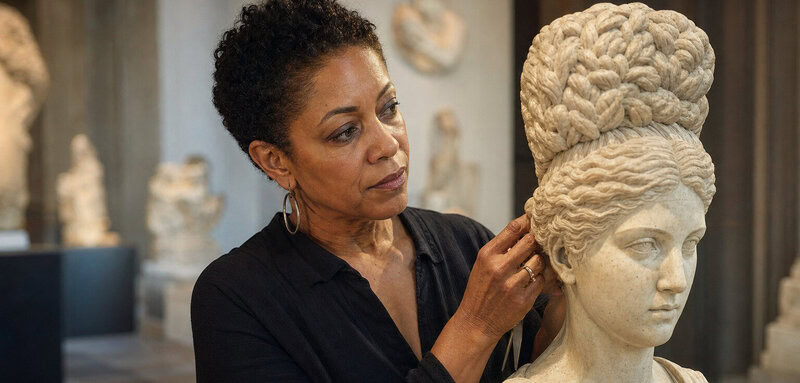
She was standing in a museum, scissors-calloused hands hovering near a marble Roman bust, staring at a hairstyle that had no business being possible — a towering, braided crown of hair rising from the stone like something a goddess had arranged on a dare. Janet Stephens was not a professor. She had no archaeology degree. She was a hairdresser from Baltimore, and she was about to crack a mystery that had defeated classical scholars for centuries.
The Busts That Wouldn’t Let Her Go
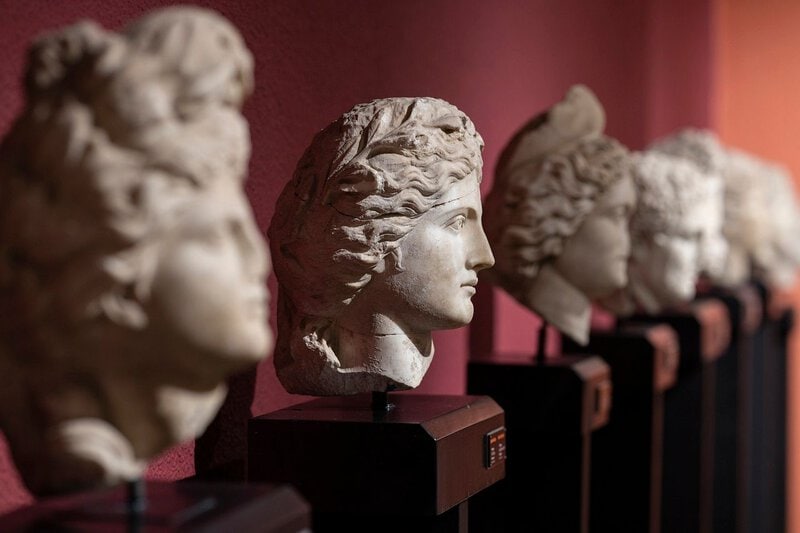
The busts are everywhere once you start looking — in the Capitoline Museums in Rome, in the Louvre, on ancient coins so worn the emperors’ faces have nearly vanished but the elaborate hairstyles of their wives remain razor-sharp. For centuries, those gravity-defying updos had generated a comfortable academic consensus: they had to be wigs. The styles were too elaborate, the architecture too improbable, for any real head of hair. Scholars said so, other scholars cited those scholars, and the wig theory hardened into received wisdom the way marble hardens into permanence.
Stephens looked at the same busts and saw a different problem entirely. As Popular Mechanics reports, after examining Roman busts with elaborate hairstyles, she realized there were no signs of pins or anything else that would support the wig theory. No grooves. No anchor points. No structural evidence of anything a wigmaker would need. Years of professional hairdressing had given her a very particular kind of literacy — the ability to read a head of hair the way an engineer reads a blueprint — and what the busts were telling her flatly contradicted what the textbooks said.
She went home, and she couldn’t let it go.
What Rome Actually Demanded of Its Women’s Hair
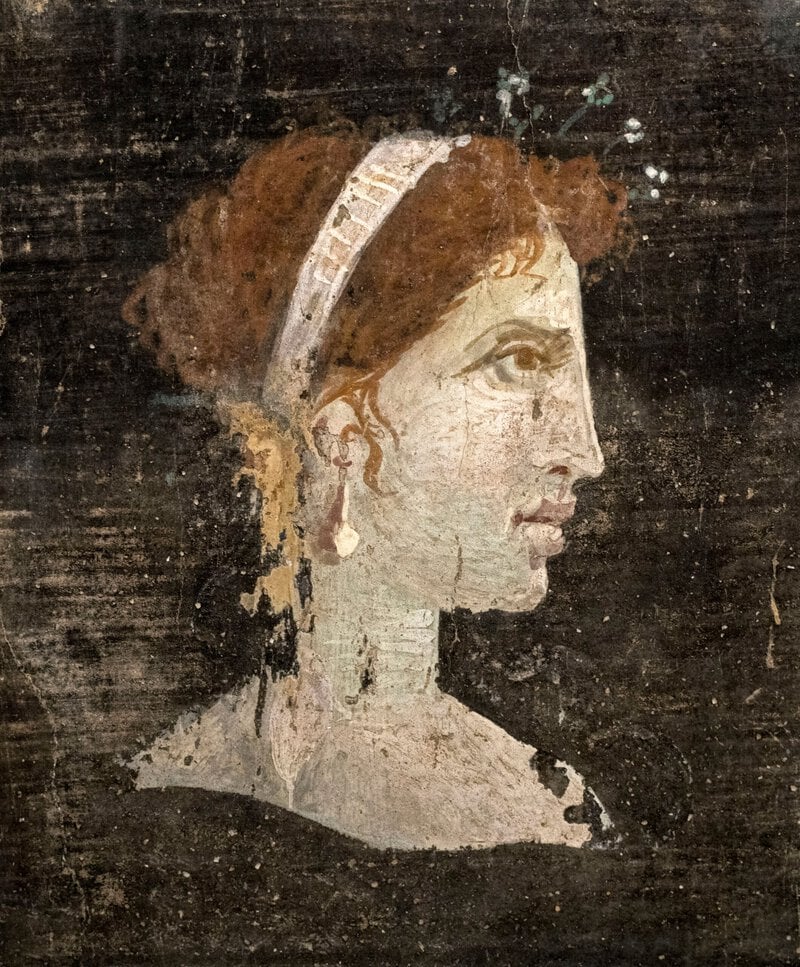
Roman hairstyles were never purely decorative. They were a social language, broadcasting rank, virtue, and political allegiance in a world where most citizens couldn’t read a word. The most codified and revered style of all belonged to the Vestal Virgins, Rome’s sacred priestesses, who tended the eternal flame believed to guarantee the city’s survival. Their hairstyle — the seni crines, meaning “six locks” — was so ritually significant that Roman brides wore it on their wedding day, borrowing the Vestals’ sanctity for the occasion.
Ancient writers including Plutarch described the seni crines in enough detail to confirm it was constructed from real hair, elaborately braided and built up on the head. But the descriptions left just enough ambiguity that later scholars felt comfortable reaching for the wig explanation when the mechanics became difficult. The style persisted across centuries of Roman portraiture — each image a frozen argument that had been waiting, apparently, for the right person to read it.
That person turned out to be someone who had spent her career standing behind heads rather than bending over texts.
The Wig Theory and Why Everyone Believed It

To be fair to the scholars, the wig consensus wasn’t laziness. It was a reasonable extrapolation from available evidence. The hairstyles looked impossible; Romans did use wigs and hairpieces, a fact well-documented in ancient sources; and — here is the quietly devastating part — no one with professional, hands-on hair knowledge had ever systematically applied their expertise to the question. Classical training prepares you to work with texts and images, which is exactly what classicists did, with great sophistication and rigor. What it does not prepare you to do is stand behind a head and attempt to physically recreate what the images show.
The absence of evidence for pins was never treated as evidence of absence. It simply wasn’t noticed, because nobody examining the busts was asking the question a hairdresser would instinctively ask within seconds: so where are the pins? The result was a multi-century feedback loop — experts citing earlier experts, the wig theory growing more comfortable with each generation, the actual mechanical problem of how the hair was constructed going entirely unexamined. It is, if you think about it, a rather spectacular example of a field asking only the questions its training prepared it to ask.
Janet Stephens Pulls on the Thread
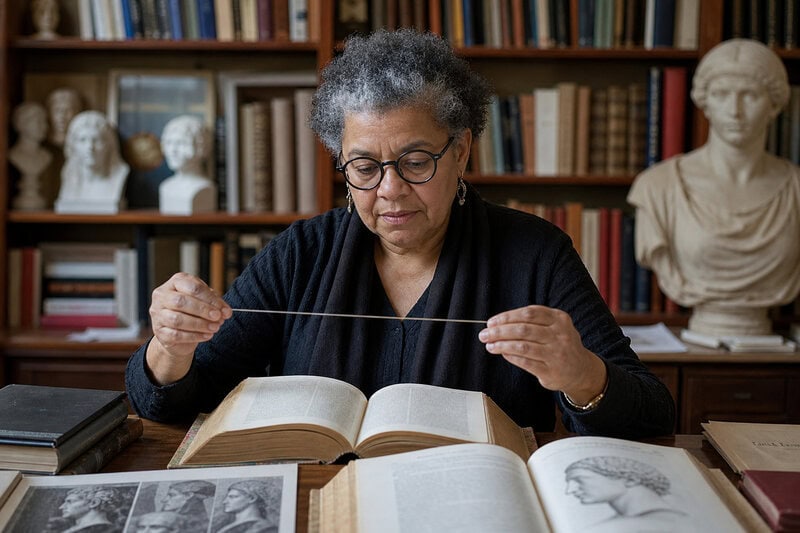
After her museum visit, Janet Stephens did something no classically trained scholar had done before her: she went back to the primary sources not to read them as literature but to mine them for technical instruction. She worked through Latin texts, consulting translations and eventually learning enough Latin to navigate the originals herself, hunting for any language that described the physical mechanics of Roman hairdressing rather than just its appearance or its symbolic meaning.
What she found hiding in plain sight was a needle. Ancient Roman hairdressing, she concluded, relied not on pins or wig supports but on a needle and thread sewn directly through the hair — stitching the braids into position on a living head, the way a seamstress might baste a seam. The tool was so ordinary, so thoroughly beneath the notice of scholars looking for grand technical secrets, that it had simply never registered as an answer.
Her salon became her laboratory. Real hair, real hands, the same basic geometry that would have been available to any ornatrix — the enslaved or freed women who served as professional hairstylists in Roman households — and a needle trailing thread. As one account of her process describes, after consulting historical records and through much trial and error, she figured out how the Vestal style was done.
The Moment It Held
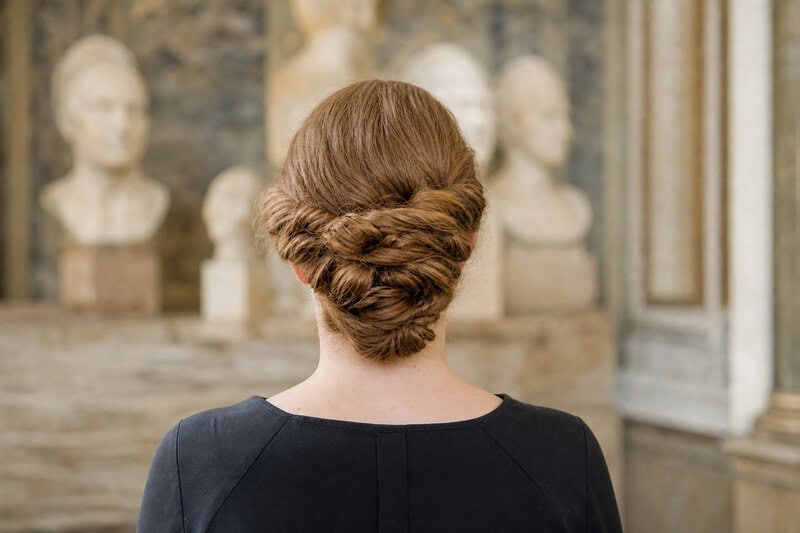
The seni crines came together on a real head in a Baltimore salon. Braids stitched into position with needle and thread, no pins, no wig, no supernatural intervention — just skilled hands working a technique that turned out to be exactly as ingenious as the results had always suggested. The style held. It held with the structural confidence of something designed to endure a Roman ceremony, not merely a photograph.
Stephens documented her process meticulously, photographing each stage. The result matched the Roman busts not approximately but precisely — the angles, the volume, the way each braid related to the others all corresponded to the stone originals. The ornatrices who had built these styles in Roman atria, working by lamplight before dawn weddings and sacred ceremonies, had not been performing miracles. They had been doing their jobs, with tools so simple and a technique so elegant that centuries of scholarship had looked straight through it.
From Salon to Scholarship
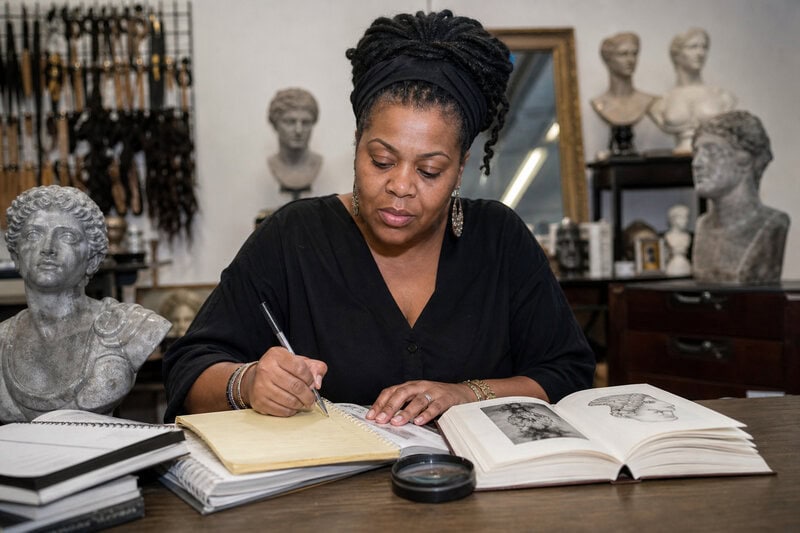
Stephens wrote up her findings as an academic paper — an amateur hairdresser submitting original research to a peer-reviewed classical studies journal. That sentence deserves a moment’s pause. The Journal of Roman Archaeology published her work, placing a working hairstylist with no formal archaeology credentials inside one of the field’s respected publications. The marble Vestals, one imagines, would have appreciated the nerve.
Her work drew attention well beyond the academy. It became a touchstone in discussions about amateur archaeology and citizen scholarship — about who gets to ask important questions, and what expertise from outside a field can see that expertise inside it cannot. Classicists who reviewed her findings confirmed what her hands had already proven: the needle-and-thread method was consistent with what ancient sources had described all along. The wig theory, comfortable for so long, no longer had a leg to stand on.
What a Hairdresser Saw That Scholars Missed
The story of Janet Stephens and the seni crines is, at one level, a story about ancient Roman hairstyles — about the elaborate, carefully coded world of Roman women’s hair and the skilled hands that created it. At another level, it is a story about the limits of purely textual scholarship when the object of study is a physical craft. The ornatrices who built these styles never wrote manuals. Their knowledge lived in their hands, passed person to person across generations, and when the chain broke — when Rome fell and the continuous tradition of Roman hairdressing simply ceased — the only way back was for someone with equivalent hand-knowledge to reconstruct the path.
That is exactly what Stephens did, across a gap of roughly two millennia, in a Baltimore salon, with a needle and thread. An American hairdresser and amateur hairstyle archaeologist who had devoted herself to studying historical hairstyles accomplished what credentialed scholars had not managed in centuries: she asked the right question, because her training had taught her precisely what to look for.
Rome left its hairstyles in stone because stone endures. The braids on those marble busts survived the fall of the empire, the medieval era, the Renaissance, the Enlightenment, and centuries of classical scholarship — waiting, patient as marble, for someone to read them correctly. It turned out that person needed not a PhD in classical studies but years of standing behind heads, a professional hairdresser’s instinctive eye for structure, and the willingness to take a needle and thread to a question that everyone else had already decided was answered.
A Broader Lesson Worth Keeping
Stephens’s discovery quietly exposes a structural blind spot that affects many academic disciplines: when the subject of study is a physical skill rather than a written idea, scholars trained exclusively in texts and images may lack the sensory vocabulary to ask the most productive questions. Archaeology has long grappled with the gap between material culture and the people who made it. What Stephens demonstrated is that closing that gap sometimes requires someone who still practices the relevant craft — who carries the bodily knowledge the ancient practitioners carried — rather than someone who has only read about it.
That is not a criticism of classical scholarship. It is an argument for the kind of cross-disciplinary collaboration that Stephens’s case makes almost impossible to dismiss. She did not stumble onto her answer by accident. She brought a different and genuinely complementary form of expertise to a problem that had been framed too narrowly for too long. The needle and thread were always there in the ancient sources. It took someone who worked with needles and thread every day to recognize them for what they were.