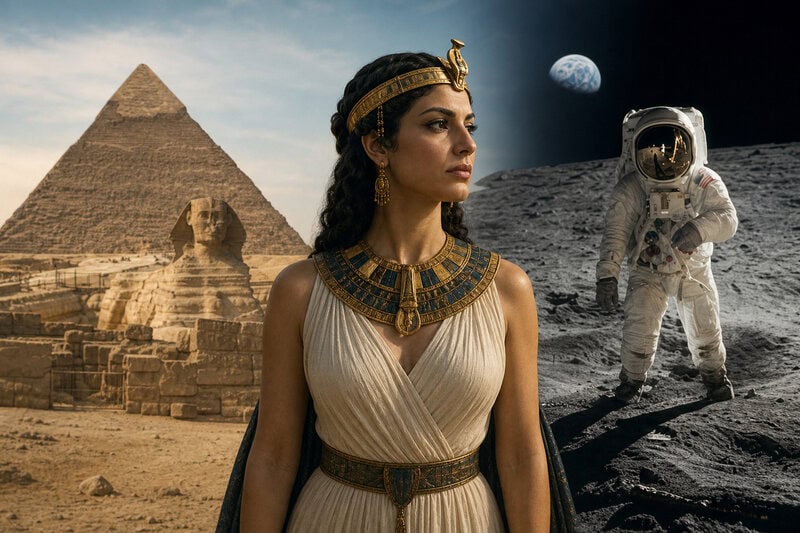
Somewhere between the last stone being hauled onto the Great Pyramid and Neil Armstrong’s boot pressing into lunar dust, Cleopatra lived her entire life — and the shocking part is just how lopsided that placement really is. The numbers, once you actually run them, break the brain in the best possible way.
The Three Dates That Reframe Everything
Before diving into the story, it helps to fix three numbers in mind:
- ~2560 BC: The Great Pyramid of Giza is completed under Pharaoh Khufu.
- ~30 BC: Cleopatra VII dies, ending the Ptolemaic dynasty.
- July 20, 1969: Neil Armstrong steps onto the Moon.
From the pyramid to Cleopatra: roughly 2,500 years. From Cleopatra to the Moon landing: roughly 2,000 years. She sits closer to the Space Age than to the age that built the pyramids — a gap large enough to swallow the entire history of the United States several times over. That asymmetry is the engine of everything that follows.
~2560 BC: The Great Pyramid Is Finished — and Immediately Begins Receding into the Past
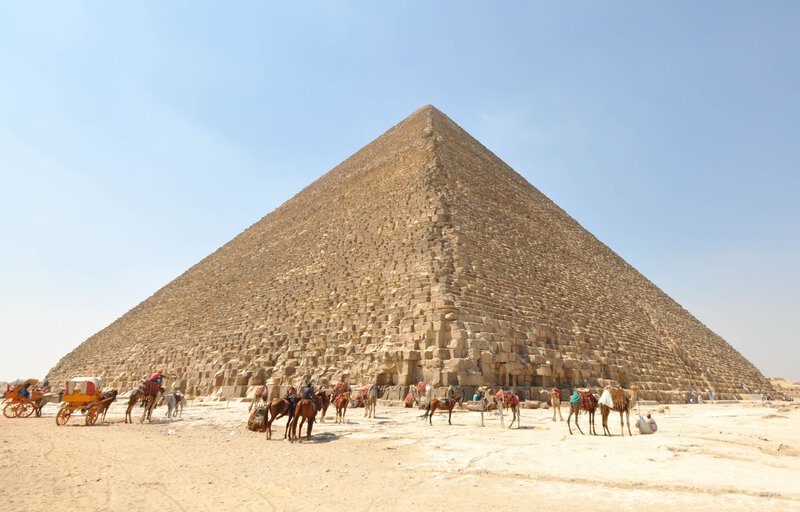
Around 2560 BC, tens of thousands of laborers completed the Great Pyramid on the Giza plateau. Rising approximately 481 feet, it would remain the tallest structure human hands had ever built for nearly four thousand years. The pharaoh Khufu, who commissioned it, almost certainly died without leaving a single word that would survive into any language Cleopatra could read.
This moment is the anchor of the entire timeline. Think of it as Year Zero — the starting gun on one of history’s most disorienting races. Every subsequent date is measured against it, and the distances involved are so vast they require a deliberate effort to feel.
~2500-1600 BC: Egypt Builds Its Last Pyramids and Then Simply Stops
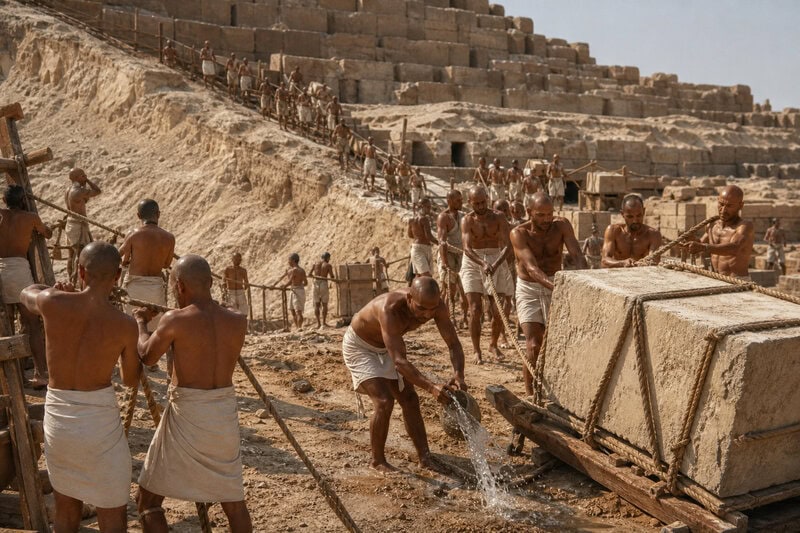
Pyramid construction was never a permanent feature of Egyptian civilization. It was a roughly 900-year cultural practice that burned bright and then wound down, ending around 1600 BC. By the time the last pyramid was completed, the Great Pyramid was already close to a thousand years old. To those final builders, Khufu’s monument was as remote in time as the Roman Colosseum is to a visitor walking past it today.
This detail matters enormously for understanding Cleopatra’s place in the story. She was not born into a living pyramid culture with fresh memories of its rituals and engineering. The pyramids had been silent, finished, and slowly crumbling for more than a millennium before her dynasty ever took the throne. She was, in a real sense, as archaeologically distant from the builders as a modern tourist snapping photographs from a tour bus.
~69 BC: Cleopatra Is Born into a World Where the Pyramids Are Already Mythology
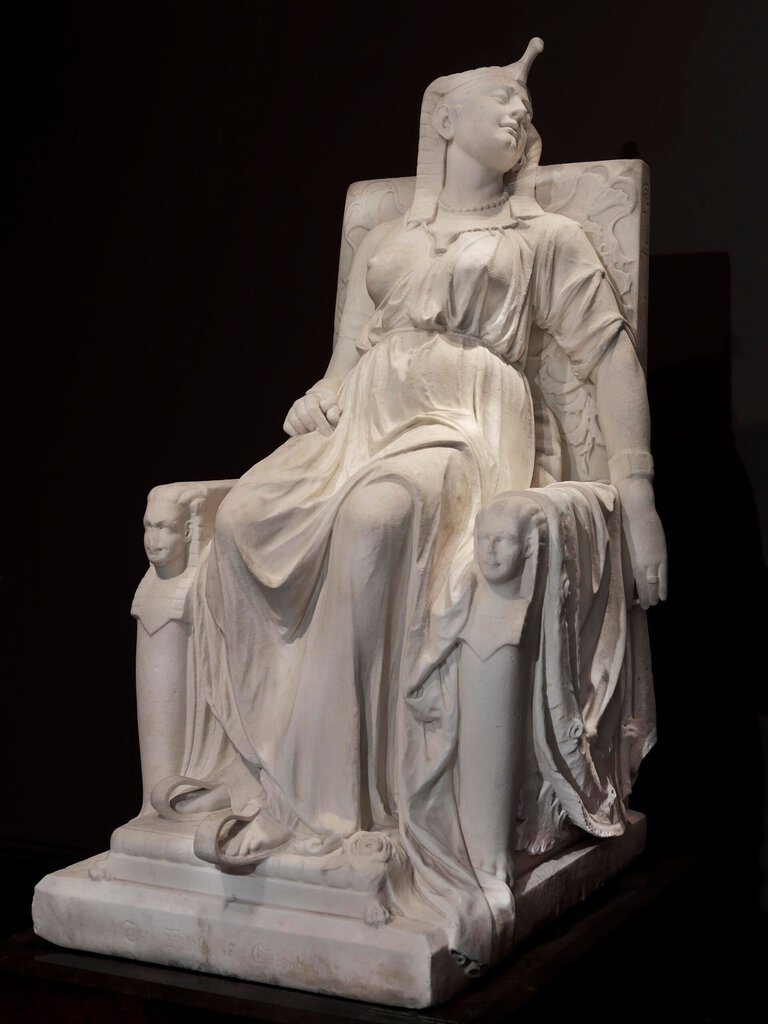
When Cleopatra VII came into the world in Alexandria around 69 BC, the Great Pyramid was already approximately 2,500 years old. The civilization that had conceived, engineered, and populated those tombs had long since transformed beyond recognition. Cleopatra was remarkable for being able to read ancient Egyptian — a skill so rare within her Macedonian-Greek dynasty that it was worth remarking upon — yet even that linguistic bridge could not close the vast temporal gulf between her and the workers who had set those stones.
To her, the Giza pyramids were what the ruins of Rome are to us: monuments of a civilization so distant it had acquired a mythological glow. The fall of Rome feels enormous and ancient from where we stand in the twenty-first century. That is roughly the same emotional and historical distance Cleopatra felt when she looked toward Giza.
~47-44 BC: Cleopatra Visits the Pyramids as a Tourist, Not an Heir
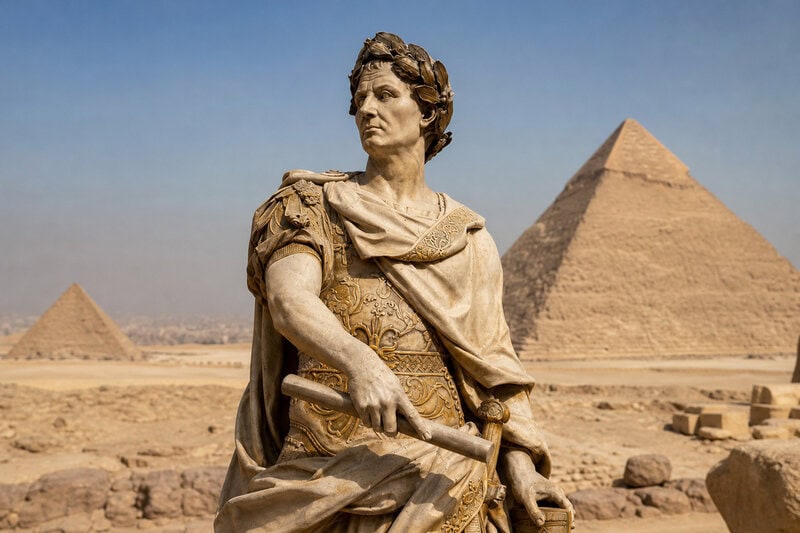
Historical accounts suggest Cleopatra traveled to Giza during the period of her alliance with Julius Caesar in the mid-40s BC. By then, Greek and Roman visitors were already composing written guides to Egypt’s wonders — the pyramids had entered that rarefied category of sights that educated people felt obliged to witness in person. They were, in other words, already an established tourist attraction within Cleopatra’s own lifetime.
This is the core irony that gives the whole timeline its peculiar charge. A woman whom we instinctively place in the category of “ancient” was herself standing before something even more ancient — something so old that her world had no living memory of how it had been built. She was a visitor to deep time, just as we are visitors to hers.
It is also worth pausing on what this means for our intuitions about “ancient Egypt” as a single era. Cleopatra is as much a part of ancient Egypt as Khufu is — yet between them lies a gulf comparable to the distance between the sack of Rome and a smartphone. The label flattens a canyon.
30 BC: Cleopatra Dies, Sitting Almost Exactly at the Midpoint — but Not Quite

In 30 BC, following the defeat of Mark Antony and the arrival of Octavian’s forces in Alexandria, Cleopatra died by suicide. With her death, the Ptolemaic dynasty ended and Egypt became a Roman province. It was a pivotal moment in Mediterranean history — but on this particular timeline, its most striking feature is its address: almost exactly between the pyramid builders and the Moon, but unmistakably tilted toward the rocket.
From the completion of the Great Pyramid to her death: approximately 2,500 years. From her death to the Apollo 11 Moon landing: approximately 2,000 years. Cleopatra sat closer to the Space Age than to the age of pyramid construction — and that gap, as a unit of historical distance, is not a rounding error. It is the entire span from Columbus reaching the Americas to the present day.
1799 AD: Napoleon’s Scholars Marvel at Ruins That Were Already Ancient to Cleopatra
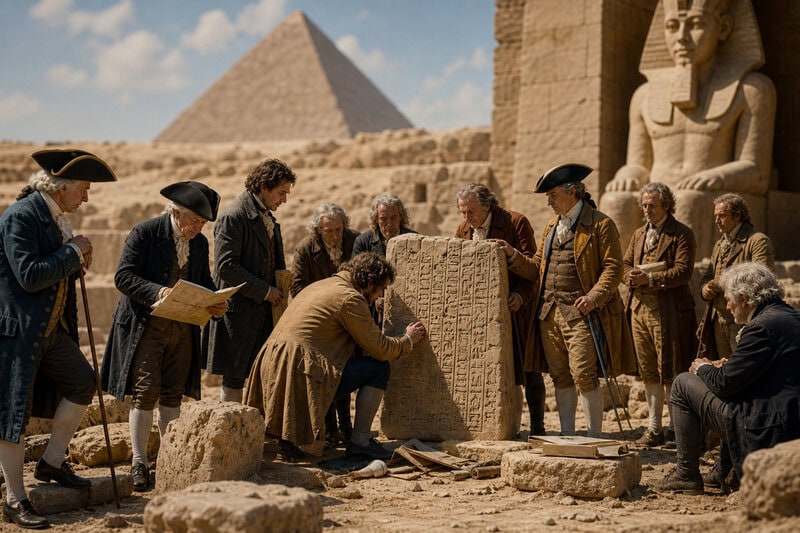
When Napoleon’s Egyptian campaign brought French soldiers and savants to Giza in 1799, the reaction was awe bordering on incomprehension. The expedition’s scholars measured, sketched, and debated structures they could not quite believe human beings had made without modern tools. What none of them paused to calculate was the layering involved: the pyramids were almost exactly as old to Napoleon’s generation as they had been to Cleopatra’s — and Cleopatra herself was by then nearly 2,000 years in the past.
The vertiginous quality of that thought — ancient ruins, observed by someone we call ancient, rediscovered by people we now file under “history” — is a small preview of the full timeline’s effect. Each era looks back at the previous one and calls it old, never quite grasping how the distances compound.
July 16, 1969: Apollo 11 Lifts Off — Less Than 2,000 Years After Cleopatra’s Egypt Fell
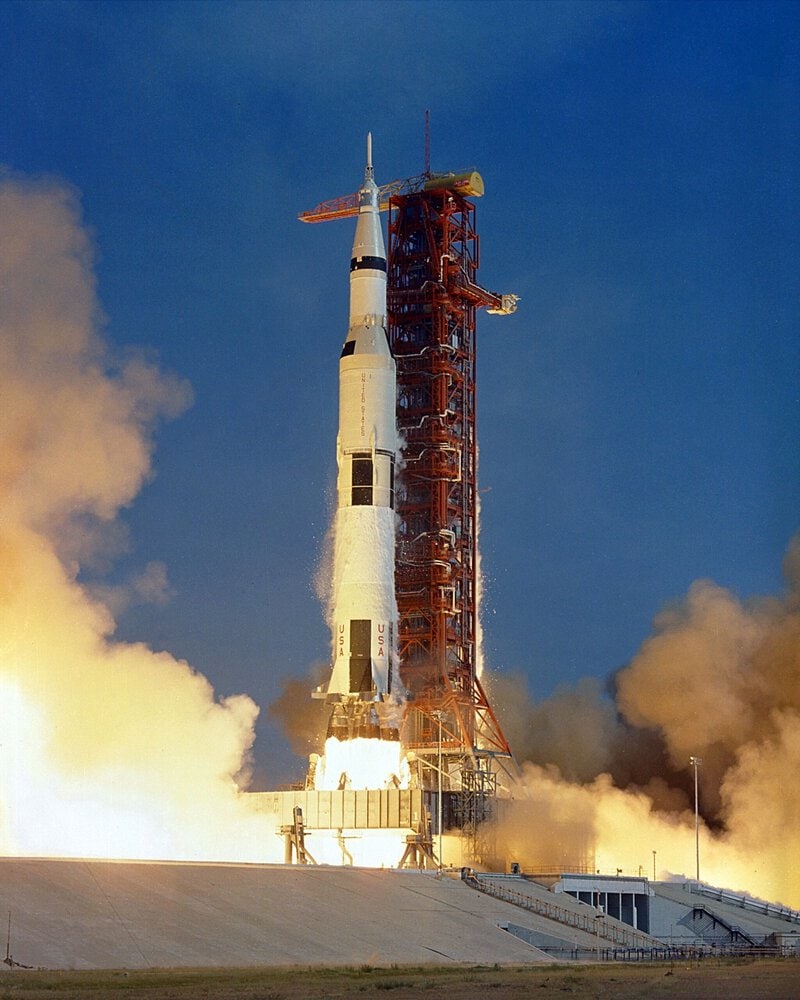
On July 16, 1969, Apollo 11 rose from Kennedy Space Center on a column of fire, carrying three astronauts toward a destination no human being had ever reached. The gap between that launch and the death of Cleopatra in 30 BC was roughly 2,000 years — a span that feels, to modern minds, like an almost incomprehensible depth of history. We instinctively treat “nearly 2,000 years ago” as extraordinarily remote.
And yet that span is smaller than the roughly 2,500 years separating Cleopatra from the pyramid builders. Less time passed between Cleopatra’s Egypt and the Space Age than between Cleopatra’s Egypt and the Egypt that built the pyramids. The rocket and the queen are, in the grand arithmetic of history, surprisingly close neighbors.
July 20, 1969: Armstrong Steps onto the Moon — Cleopatra’s Nearest Neighbor in Time
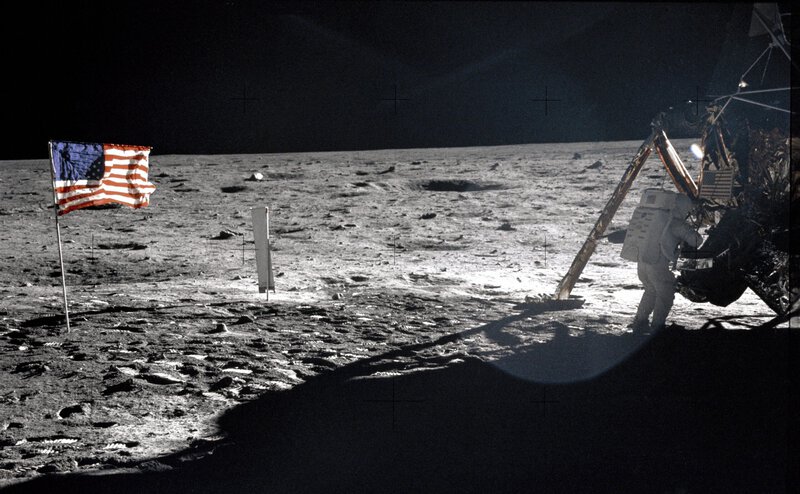
At 10:56 PM Eastern time on July 20, 1969, Neil Armstrong descended the ladder of the Eagle lunar module and placed his boot on the surface of the Moon. It was one of the most dramatic single moments in recorded human history — and in the sweep of the timeline that begins at Giza in 2560 BC, Armstrong and Cleopatra are practically contemporaries. Cleopatra lived closer in time to the Moon landing than to the building of the Great Pyramid.
If you drew Cleopatra’s life as a single point on a line stretching from the pyramids to the Moon landing, that point would sit noticeably closer to the rocket end. She would lean, unmistakably, toward Armstrong. The image of the last pharaoh of Egypt as a near-contemporary of the Apollo program is absurd-feeling and entirely mathematically correct.
The Full Span: and Why Our Mental Map Gets It Wrong

The complete timeline runs from the Great Pyramid’s completion around 2560 BC to the Moon landing in 1969 AD. Cleopatra’s life falls roughly 2,500 years after the pyramid and only about 2,000 years before the Moon landing. This asymmetry is the brain-breaking core of the fact, and it holds up under any honest accounting of the dates.
Our mental model of history tends to compress everything before, say, the Renaissance into a single blurry category labeled “ancient.” The pyramids, Cleopatra, the Roman Empire, the Vikings — they all get filed together in that dim, pre-modern drawer. But the numbers refuse to cooperate. The drawer is not one thing. It contains canyons.
Scholars sometimes call this cognitive habit temporal compression — the human instinct to assume that everything old happened at roughly the same time, in the same ancient blur. It is a natural consequence of how memory and narrative work: the further back you look, the more events collapse into one another. But compression is not the same as accuracy, and the Cleopatra timeline is one of the sharpest available tools for breaking the habit.
Other Timelines That Shatter the Same Assumption

Once you feel the vertigo of this particular example, it becomes hard not to look for others — and they are everywhere:
- The Stegosaurus and the T. rex are both “dinosaurs” in popular imagination, yet more time separates them from each other than separates the T. rex from us today.
- The Roman Empire at its height was as far in time from ancient Sumer as it is from the present day.
- Woolly mammoths were still alive on Wrangel Island when the Great Pyramid was being built — they were not a creature of the prehistoric murk but a living animal in the Egyptian world.
Each of these examples does the same work as the Cleopatra triangle: it forces a renegotiation of the mental map. The past is not a flat plain where Cleopatra and Khufu might wave at each other across a short distance. It is a landscape of extraordinary depth, full of chasms that our tidy categories of “ancient” and “modern” quietly paper over — until someone runs the numbers and the ground falls away beneath your feet.
The Takeaway: Run the Numbers on History
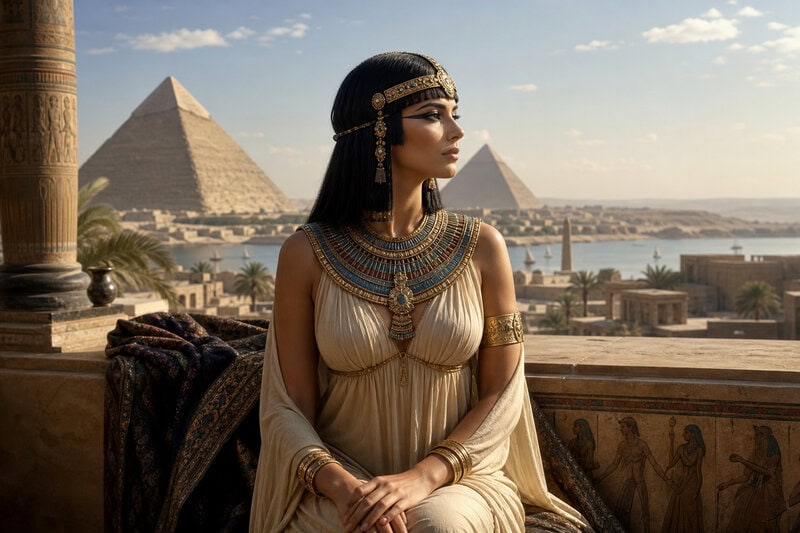
The triangle formed by Cleopatra, the pyramids, and the Moon landing is one of history’s most useful correctives. It does not require specialist knowledge or access to archives — just three dates and a willingness to do subtraction. The reward is a permanently altered sense of historical scale.
Once you have felt the vertigo of this timeline, history never quite sits still again. Every date becomes a question about what else was happening, how far away other events really were, and just how badly your instincts about “ancient” have been misleading you all along. The numbers are always there, waiting to be run. Most of us just never bother — until something as simple as Cleopatra, a pyramid, and a Moon boot forces the issue.