
11. The Taliban and Afghanistan’s opium crop
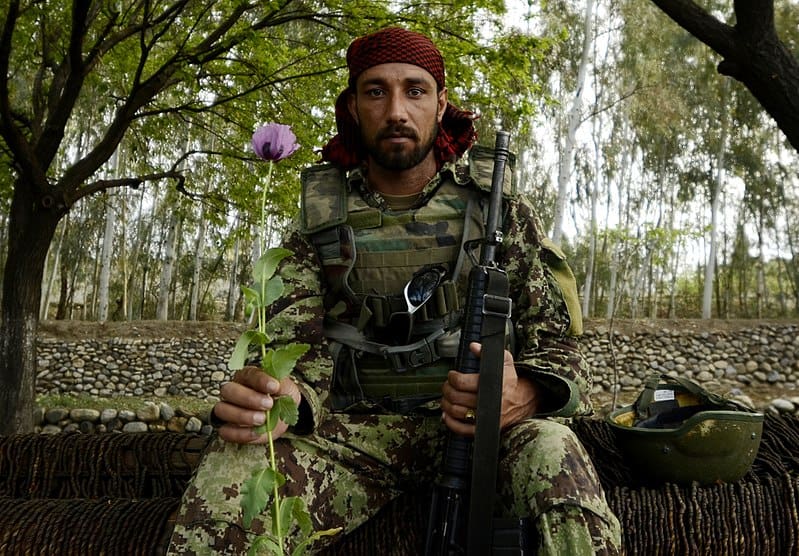
After seizing power, the Taliban announced a ban on the growth of poppies and the production of opium. It was an empty promise. Mullah Omar called the production of narcotics incompatible with the teachings of Islam. Taliban leaders quickly learned the cultivation of poppies and production of opium presented a valuable source of revenue. Heavy taxes were imposed on farmers who produced opium, which provided the majority of the funds available to the Taliban in Afghanistan. Under tremendous international pressure, in 2000 the Taliban banned the growth of poppies as an official policy. Yet Afghani stores of opium remained extensive, and no effort was forthcoming to destroy existing stocks. The result was opium prices rising globally, increasing the value of their stores, as well as encouraging further production.
Following the US led invasion of Afghanistan, efforts to stop the production of opium in Afghanistan proved a costly failure. The United States alone spent over $8.6 billion in futile attempts to eradicate opium production. Among the programs were financial incentives for Afghan farmers to grow other crops for shipment to the west, among them wheat and saffron. But in areas where Taliban support remained, opium continued to be produced, lining the pockets of the Taliban leadership. By the end of the first decade of the 21st century, opium produced in Afghanistan accounted for nearly 90% of all such products in the world. By 2015 the total acreage in the country dedicated to the production of opium reached 250,000 hectares, nearly four times the level of the mid-1990s. The Taliban relied on income from the drug trade to remain operational throughout the occupation of Afghanistan by NATO troops.


