
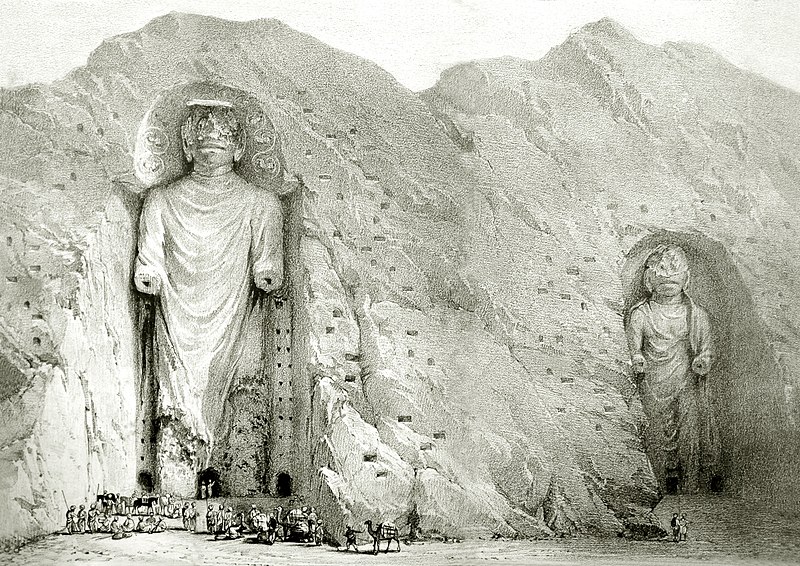
10. The destruction of the Buddhas of Bamiyan
Until the spring of 2001, two stone Buddhas stood in niches carved into the side of a cliff in central Afghanistan’s Bamiyan Valley. The statues, carved directly out of the sandstone rock of the cliff face, represented Vairocana Buddha and Gautama Buddha. They were completed between 570 and 620 CE. The main statues were of standing Buddhas, with the faces and other details supplemented with mud and straw coatings to delineate the features. In July 1999, Mullah Omar announced the Buddhas would be protected, in part because they represented a potential source of income from tourism. In 2000, local Taliban leaders asked for financial assistance to repair the Buddhas and restore their original appearance. Several international entities offered financial support for the project. By then, international assistance with food and medicines from NGOs had all but ceased, due to protests over the Taliban’s treatment of women.
Omar ordered the destruction of the Buddhas, and they were blown up by Taliban forces in early 2001. He then blamed the international community for their destruction. Omar reasoned that the offer of money for the restoration of statues in the face of his people’s starving was “extremely deplorable”. Other Taliban leaders gave different reasons for the destruction of the Buddhas, all of them based on their interpretation of Sharia. The international reaction to the destruction of the Buddhas was overwhelming condemnation. The Taliban responded with little more than a shrug and continued to blame the isolating of Afghanistan by the rest of the world. To Mullah Omar, the Afghani people were suffering and starving not because of Taliban practices, but due to international indifference to their plight.


