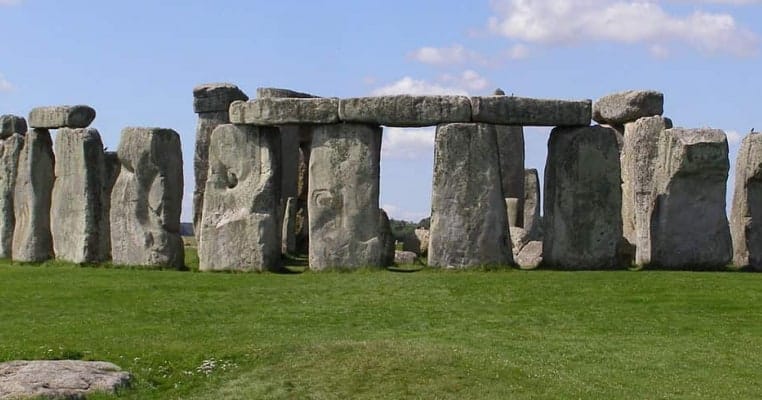
8. The biggest stones are incredibly heavy
So far we’ve been talking about the near-miraculous Bluestones and their long journey from Wales, but let’s not forget about the other stones at Stonehenge. The larger Sarsens were found more locally, but people still had to lug them from as far away as 25 miles. Each of the larger ring of Sarsens is 4.1 metres (13 feet) high, 2.1 metres (nearly 7 feet) wide, and weighs about 25 tonnes. All you can really say is thank God they weren’t in Wales. The Sarsens also came after the Bluestones to Stonehenge – but we’ll get onto that later.
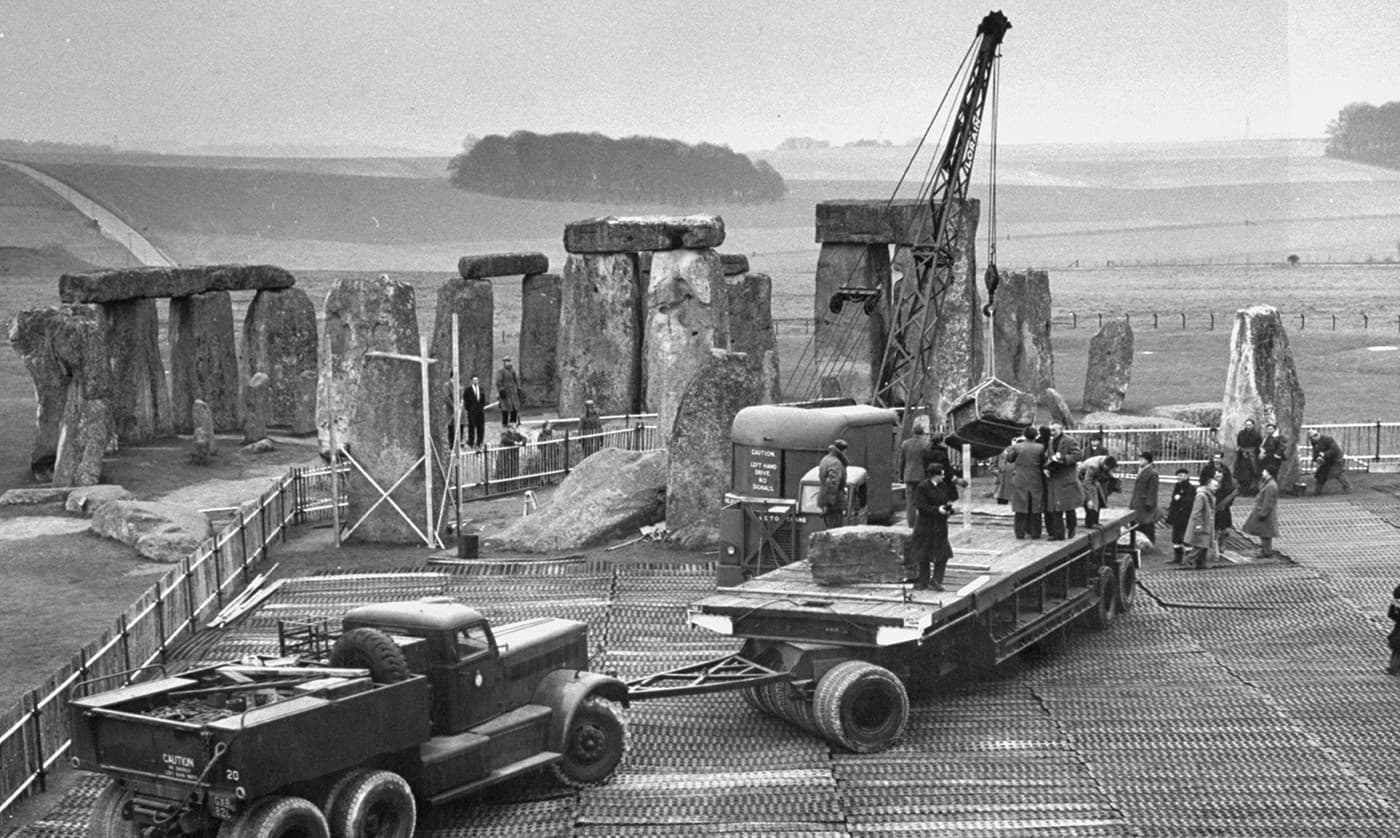
Today, 53 Sarsens remain at Stonehenge, but there were originally around 85. To get a sense of how difficult these were to move, think of the restoration work carried out at Stonehenge in the 1950s and 60s (above). Heavy duty machinery had to be employed to move the Sarsens, and even then it was a real struggle to get the fallen stones upright despite the use of scaffolding. No one knows precisely how prehistoric people got the larger Sarsens upright, or managed to lay the smaller Sarsens to flat on top of the 4-metre high monsters.


