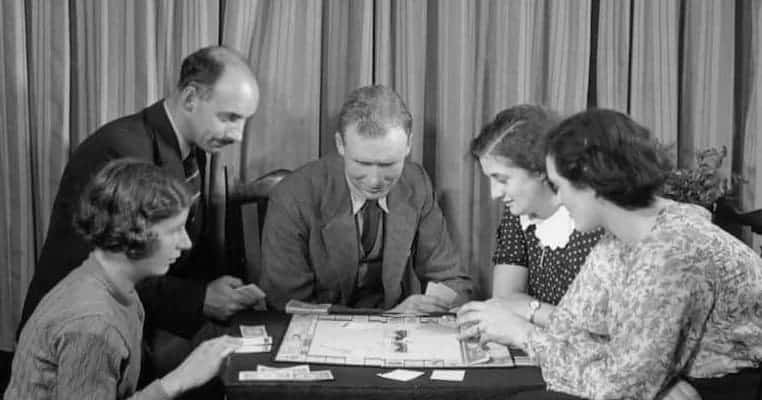
Monopoly Saves The Day

People didn’t have much money during the Great Depression, but that didn’t mean they couldn’t play a board game and act like it. Monopoly, one of the most popular board games of all time, started to quickly make its way into the homes of people beginning in the mid-1930s. While Monopoly officially received a patent in 1904, Elizabeth Magie invented the game around 1902. Magie, who was against capitalism, wanted to show the world how capital is evil with the real estate game.
The idea of people enjoying a game which focuses on money during a time when people struggled to stretch a penny can be baffling. However, you might find the reason for the interest in the board game simple. Board games became popular during the 1930s as it allowed families and friends to spend time together without having to spend money. While Monopoly wasn’t the only board game, it did become a board game which became connected to the Great Depression.
The Wonderful Benefits of Monopoly

The truth about Monopoly and the Great Depression is Monopoly held many benefits for families. One of these benefits was that Monopoly allowed families to forget about their life stresses. During the Great Depression, many members of the family felt overwhelmed by the difficulties of the economy. Parents and children as old as 7 or 8 would be found working for pennies a day. Families would skip meals because they weren’t able to buy enough food. The heavy stress would put a burden on the family. However, Monopoly would lift that burden even if only for a few hours.
Another benefit of this iconic board game is a good time. Remember, much of the entertainment we see around today wasn’t around during the 1930s. Families didn’t have TV, not all families had a radio, and they definitely couldn’t afford to go out to a movie, dinner, or another type of evening social entertainment. Therefore, they needed to find other means of entertainment and Monopoly gave families this source of entertainment they craved. Monopoly is a family-friendly game which included young children.
The third benefit of Monopoly was the price. Like other board games that came about during the Great Depression, Monopoly was cheap and reusable. Families could save up to spend money on Monopoly and kept it for as long as they wanted to. Finally, Monopoly gave people psychological benefits. While they struggled financially in their daily lives, the game gave people a sense of wealth and be competitive. Humans can be naturally competitive, and Monopoly allowed them to grab onto their competitive nature in a fun and entertaining way.
Opening The Door To A New World

In the bigger picture, what Monopoly did was open the door to a whole new world. While board games were a part of life for years, Monopoly made board games extremely popular. Quickly, other board games such as Sorry!, Chutes and Ladders, and the Game of Life became popular. People started to latch onto the idea of being able to stay home and relax to a board game. Of course, the fact that many families had light in their homes by this time helped families feel cozy about their evening board game entertainment.
Next to Monopoly, Scrabble became a popular board game during the 1930s. The man who invented Scrabble was Alfred Mosher Butts, who cited the reasoning for his inventions as boredom. Furthermore, Alfred became unemployed and realized he had a lot of time on his hands. Therefore, Alfred made advancements to a previous board game he created called Lexiko. After his invention, Alfred started selling his game. These sales helped Alfred, and his family, survive through the Great Depression.
Companies, such as Parker Brothers, continued to try to make money off of the game Monopoly. About a year after Monopoly became a hit in the homes of families all over the United States, they decided to invent another game. This game, known as Bulls and Bears, became their second major financially-themed game. However, Bulls and Bears would not see the popularity height over Monopoly. This game focused on buying and trading stocks in order to make more money than your opponents.


