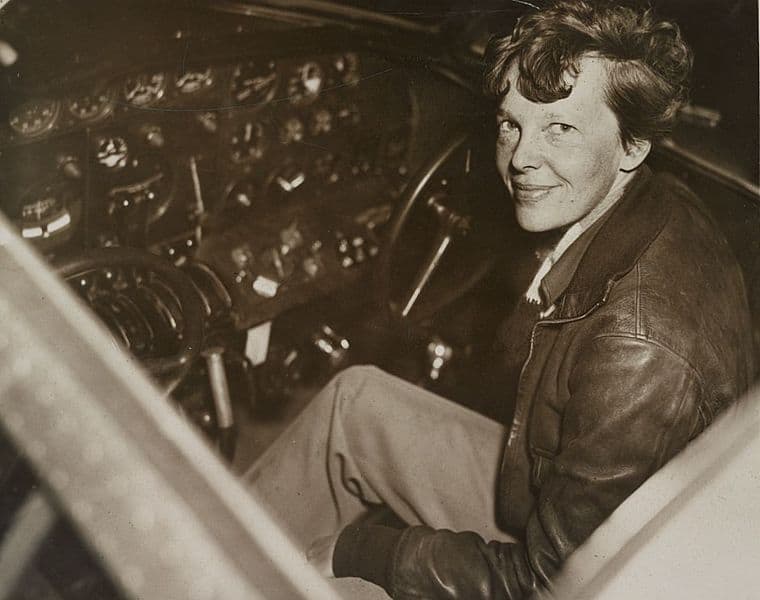
23. Monsignor James Kelley and Amelia Earhart

Monsignor James Francis Kelley was a noted Catholic priest and a former president of Seton Hall University, and also a friend and confidant of Irene Bolam. In 1987, after Bolam had died, Kelley informed a Rockville, Illinois, reporter that Bolam was Earhart. According to Kelley, Earhart changed her identity as a result of the trauma suffered in Japanese hands. Previously, the priest informed a New Jersey newspaper that he could not comment on some of the things he learned from Bolam since it would “violate everything I learned in the confessional”. Kelley alleged that the repatriation of Earhart following the war was a government operation, conducted in strict secrecy, and he was at the heart of the whole affair.
During the repatriation process, according to Kelley, an emotionally exhausted Earhart expressed her desire for anonymity. All of Kelley’s story was related to friends who shared it with reporters and researchers following the priest’s death. His own memoirs made no mention of Earhart at all. Other claims made by Kelley regarding other celebrities were soundly rebutted by scholars. For example, he claimed to have visited Bruno Hauptman on death row at least three times just before the latter’s execution (for the Lindbergh baby kidnapping and murder). Prison records of Hauptman’s visitors don’t mention Kelley. He also claimed to have witnessed Clark Gable testing an ejection seat in Newark during World War II. Gable’s service record is well-documented, and he spent no time in Newark while in the service.


